
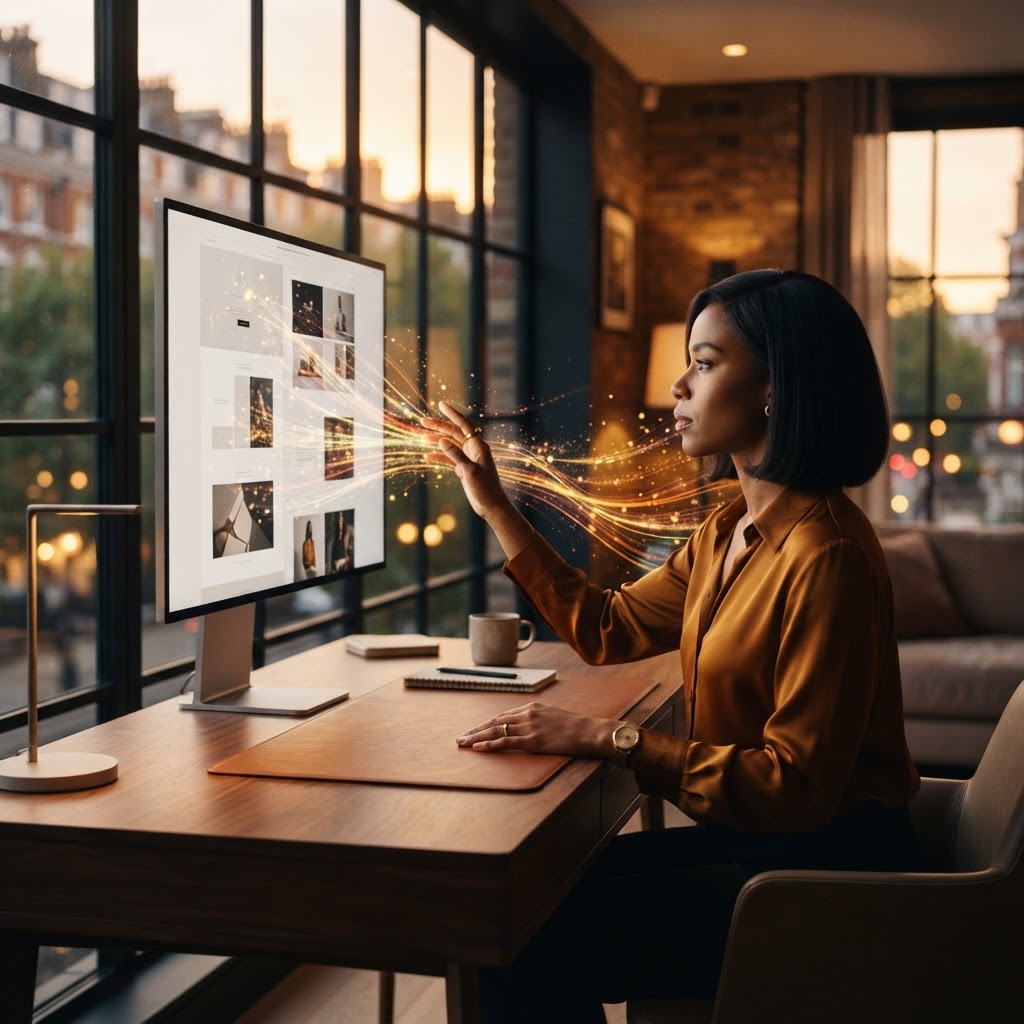
Made Possible.ai Brings AI-Powered Website Building to London's Entrepreneurs
New platform promises to help founders, creatives and small businesses turn an idea into a live website or digital product simply by describing what they want.
London has never been short of ideas.
From independent fashion labels and restaurants to consultants, creators, property businesses, event companies and start-ups, the capital is full of entrepreneurs who know exactly what they want to build — but not always how to build it.
Made Possible.ai is aiming to change that.
The new AI-powered website and application builder allows users to create digital projects using ordinary language rather than code.
A user can simply type: "Create a beautiful luxury website for my Chelsea-based interior design company with a portfolio, enquiry form, testimonials and consultation booking." Made Possible then begins building the website. No HTML. No CSS. No complicated development environment. Just the idea.
A Different Way to Build Online
The technology sits within the rapidly growing world of AI-assisted development and vibe coding, where users explain the outcome they want and artificial intelligence helps create the underlying product.
Made Possible is designed to take that concept beyond a traditional website template. Its AI builder can work across an entire project, generating layouts, pages, content and functionality before allowing the customer to continue refining the result through conversation.
If the homepage feels too corporate, the user can ask for something warmer. If the site needs another page, the AI can add one. If the branding needs to feel more luxurious, minimal, colourful or editorial, the user can request that too.
The aim is to make building online feel less like programming and more like collaborating with a digital creative team.
The aim is to make building online feel less like programming and more like collaborating with a digital creative team.
Particularly Relevant for Chelsea Businesses
For independent businesses across Chelsea, Kensington and wider West London, the appeal is easy to understand. A new restaurant may need a sophisticated website quickly. A fashion designer may want an online portfolio. A personal trainer could require a booking platform. A property consultant might want a lead-generation website. A beauty entrepreneur may need a premium digital presence before a product launch.
Restaurants
A sophisticated website with menu, reservations and gallery — built in minutes, not weeks.
Fashion Designers
An online portfolio that looks as refined as the collection itself, without a developer.
Personal Trainers
A booking platform with scheduling, payments and client management — all by description.
Property Consultants
A lead-generation site with listing pages, enquiry forms and agent profiles.
Beauty Entrepreneurs
A premium digital presence ready before the product even launches.
Start-ups
A working prototype to test an idea with real users before investing in custom development.
Traditionally, even relatively straightforward websites can involve lengthy discussions with developers, design revisions and significant upfront costs. Made Possible.ai is designed to reduce that friction considerably.
From Temporary Subdomain to Your Own Brand
Users can initially publish projects using a Made Possible-powered subdomain and, on suitable plans, connect their own domain name. That means a business can build and test its project before connecting its permanent branded address.
For established Chelsea businesses, that distinction is important: the final website can remain entirely under the company's own identity rather than looking like a generic hosted profile.
More Than Static Web Pages
Made Possible is also being developed for projects that need more than a homepage and contact form. The platform can support database-backed applications, file storage and integrations that allow users to create more sophisticated digital products.
That could include member areas, directories, booking systems, customer portals and other online services.
For more technically experienced businesses, users can also connect external services such as Supabase and, on appropriate plans, work with their own AI provider credentials.
Why This Matters Now
The wider change taking place in technology is significant. For years, entrepreneurs were told that having a great idea was only the beginning. They still needed somebody who could design it, code it and deploy it.
Artificial intelligence is beginning to challenge that assumption. The founder may increasingly be able to create the first version themselves.
That does not eliminate the need for professional developers on highly complex projects. What it does is make the starting point far more accessible.
A restaurant owner does not need to become a programmer. A fashion entrepreneur does not need to learn JavaScript. A consultant does not need to understand server architecture before creating a professional digital presence.
They can begin with the thing they already understand best: their business.
Describe it. Build it. Refine it. Publish it.
Describe It
Type what you want in plain English. No briefs, no wireframes, no technical specification documents.
Build It
The AI generates layouts, pages, content and functionality across the entire project.
Refine It
Ask for changes through conversation. Warmer, more minimal, more pages — just say it.
Publish It
Launch on a Made Possible subdomain, then connect your own branded domain when ready.
London Creativity Meets Artificial Intelligence
There is something particularly fitting about a platform such as Made Possible emerging at a time when London's creative and entrepreneurial communities are embracing AI at extraordinary speed. Chelsea has always combined established businesses with ambitious new brands.
Made Possible.ai is effectively betting that the next generation of those businesses will expect technology to work differently. Instead of adapting their idea to whatever a website template allows, they will increasingly expect the software to adapt to them.
And that may ultimately be the most interesting thing about Made Possible. Its promise is not simply that AI can build websites. It is that people with ideas may no longer need technical expertise before they can begin bringing those ideas to life.
Made Possible.ai
Made Possible.ai is currently undergoing final testing ahead of its wider launch.
Visit madepossible.aiChelsea Monthly
Business & Technology · The Innovation Issue