
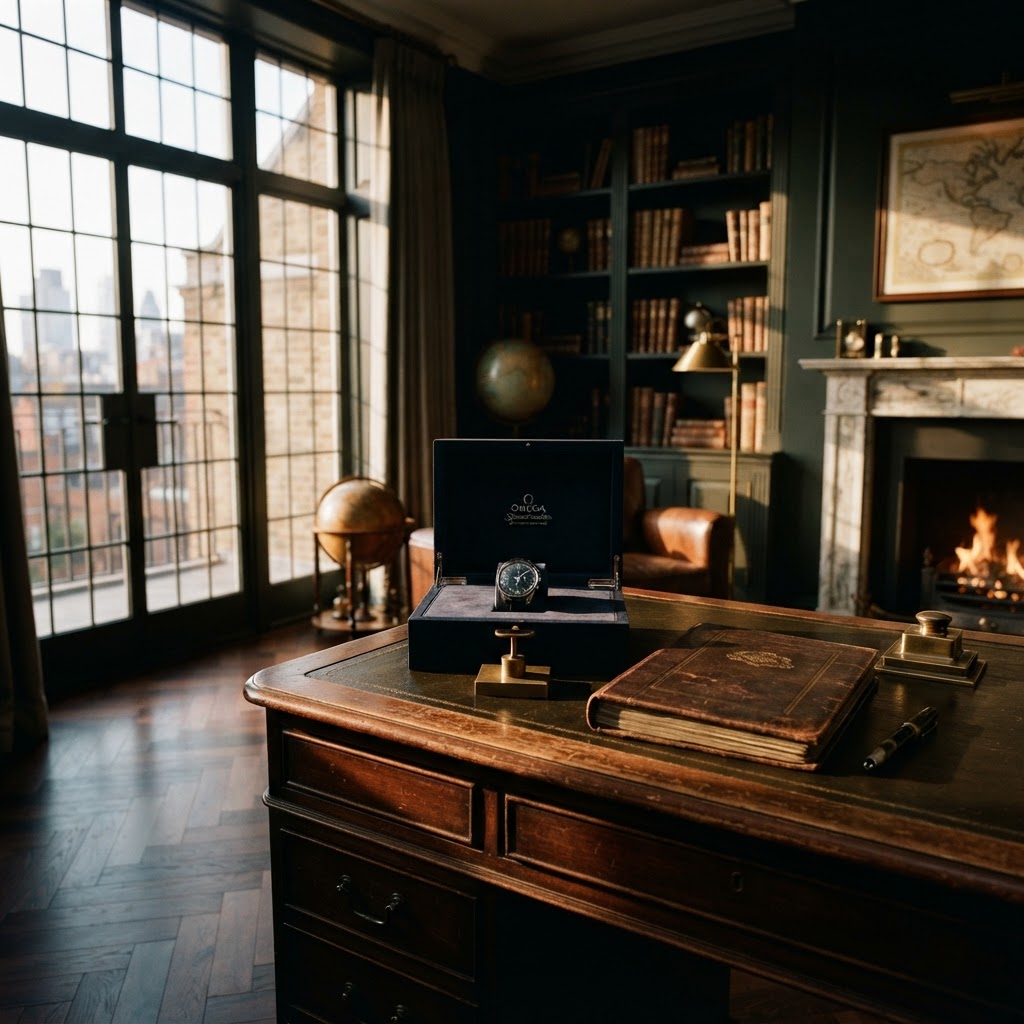
In the rarefied circles of Belgravia and the private boardrooms of Mayfair, wealth has long ceased to be about mere acquisition. As high-net-worth individuals navigate an increasingly saturated market, the true barometer of power is not what one can purchase, but what one is permitted to acquire. This is the new architecture of desire: a strategy built entirely upon the art of scarcity.
The Psychology of the Waitlist
For the modern HNW investor, the waiting list is no longer a logistical inconvenience; it is a validation of status. Consider the horological dominance of Patek Philippe or the hermetic distribution models of Hermès. These brands do not sell objects; they sell membership into a closed, temporal ecosystem. As Julian Thorne, a senior partner at a leading London family office, notes, 'Our clients are not looking for utility. They are seeking assets that demonstrate a defiance of market trends. When a brand controls the aperture of supply with surgical precision, it transforms a commodity into an heirloom.'
The Mirage of Accessibility
While mass-market brands pivot toward digital democratization, the vanguard of luxury is retreating behind velvet ropes. This 'controlled withdrawal' is the antithesis of the growth-at-all-costs mandate that plagues publicly traded conglomerates. By limiting distribution to private boutiques or invite-only digital portals, brands maintain the mythic quality of their provenance. It is a lesson in behavioral economics: the human brain assigns exponential value to items that are categorically unattainable to the collective.
The most precious luxury is not the one that glitters, but the one that remains out of reach for all but the few who understand the value of patience.
Investment as Identity
For entrepreneurs and visionaries, the strategy of scarcity mirrors the best principles of venture capital. Just as a founder guards their cap table, a luxury house guards its exclusivity. This strategy is now bleeding into premium hospitality and concierge services. When private members' clubs in Chelsea or remote retreats in the Scottish Highlands refuse even the most generous applications, they are not being elitist—they are preserving the integrity of the peer group. For the HNW individual, proximity to such exclusivity is a foundational element of their social and professional capital.
Beyond the Balance Sheet
Ultimately, the pivot toward scarcity is a response to the dilution of the luxury segment. When digital platforms and luxury e-tailers make everything available at a click, the psychological premium vanishes. The future of luxury—the true, legacy-defining future—will belong to those who understand that in a world of abundance, the most profound statement of wealth is simply saying, 'no'. As we look toward 2027, the brands that will define the portfolios of our readers are those that treat their wares not as products, but as elusive, sequestered treasures.