
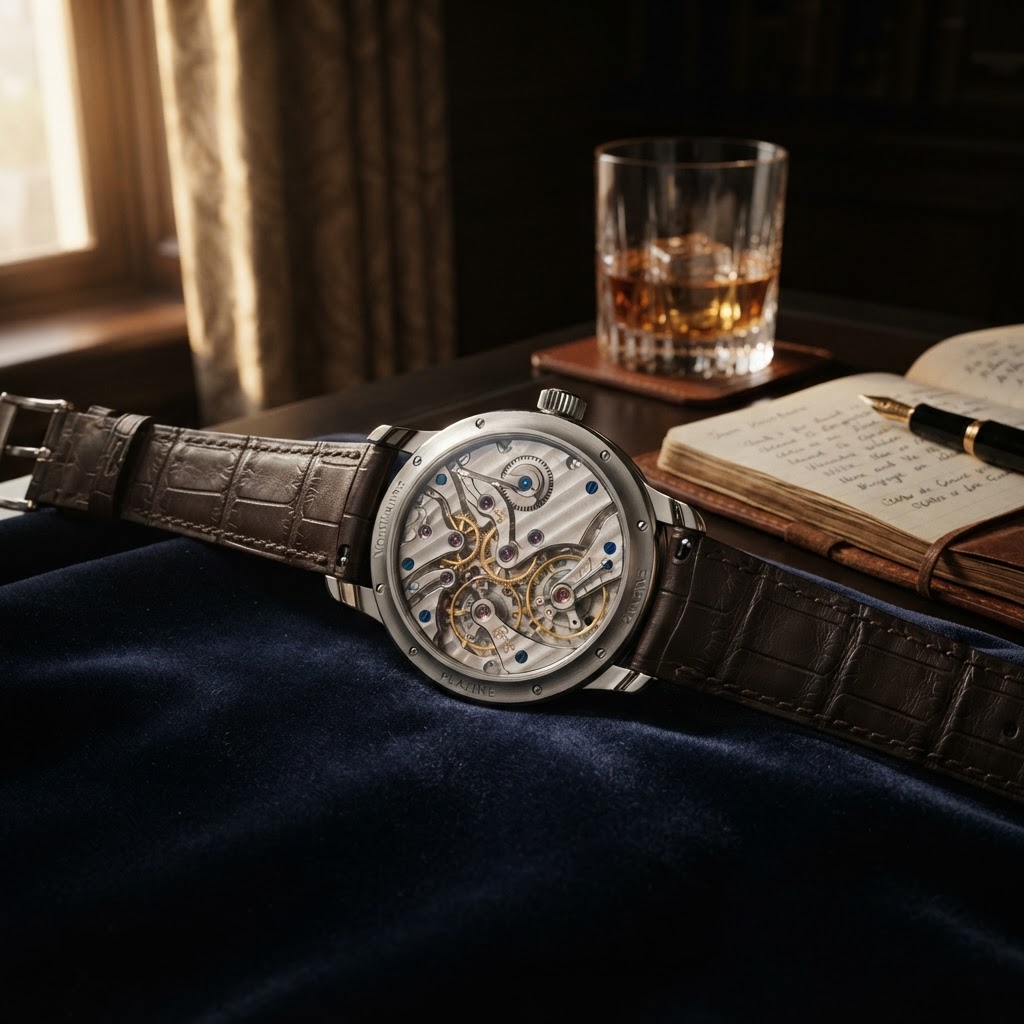
In the quiet, wood-paneled sanctums of Mayfair’s most exclusive private members clubs, a silent revolution is ticking. For the modern high-net-worth individual, the era of walking into a boutique to purchase a flagship model is, quite simply, over. True luxury, in this mid-decade climate, has migrated from the wrist of the masses to the atelier of the artisan. The art of the bespoke watch has become the definitive marker of a life well-curated, a testament to the fact that while money can buy inventory, it cannot manufacture legacy.
The Shift to Hyper-Personalization
As we navigate the sophisticated complexities of 2026, the discerning collector no longer views a watch as a mere tool for timekeeping. It is a canvas for biography. Whether collaborating with independent masters like Philippe Dufour or commissioning one-off complications from the bespoke departments at Vacheron Constantin, collectors are demanding more than just mechanical perfection; they are demanding an extension of their own aesthetic signature.
True luxury is the ability to dictate the impossible. When a client requests a movement that celebrates a specific milestone or an aesthetic that matches the patina of a rare vintage wine, they are moving beyond the transactional. They are moving into the realm of the eternal.
Beyond the Boutique Experience
Consider the recent trend sweeping through the salons of Bond Street. Collectors are moving away from the loud, recognizable 'trophy' watches—the heavy gold chronographs that once defined the hedge fund aesthetic—in favor of discreet, hand-finished masterpieces. These bespoke commissions often involve secretive meetings held over caviar and vintage Krug, where the client works alongside master horologists to select everything from the alloy of the case to the specific frequency of the balance wheel. It is an experience that mirrors the meticulous curation of a private art collection or the careful sourcing of white truffles for a private dinner at home.
The Intersection of Wellness and Craft
Interestingly, this pursuit of bespoke horology often mirrors the broader wellness shifts observed in our Chelsea circle. Just as the modern elite prioritize high-end skincare, private spa retreats in the Alps, and personalized nutrition, they approach their watch collecting with a focus on longevity and craftsmanship. A custom-made timepiece, built to be passed down through generations, is the ultimate 'wellness' asset—an heirloom that bridges the gap between the material success of the present and the historical legacy of the future.
Investing in the Unique
For those who frequent the auction houses of Christie's or Sotheby's, the data is clear: unique pieces consistently outperform mass-market serial numbers. However, for our readers, the investment is secondary to the profound satisfaction of ownership. When you commission a watch, you are not merely purchasing an object; you are commissioning a story. From the hand-stitched leather straps sourced from specific equestrian tanneries to the bespoke engraving hidden on the inner casing, every detail serves as a quiet nod to a life lived with intention. As we look toward the final quarter of 2026, the question is no longer 'What are you wearing?' but rather 'Who wrote your time?'