
In the quiet, cobblestoned enclaves of Chelsea and the expansive vistas of the Home Counties, the definition of luxury property is no longer anchored by provenance alone. For the ultra-high-net-worth individual, the historical prestige of a Knightsbridge townhouse or a Grade II-listed manor is merely the canvas; the masterpiece is now found in the radical, invisible technology and sculptural interventions that define the modern home.
The Invisible Sanctum
The latest trend in ultra-prime real estate, particularly within the deep-rooted foundations of prime London, is the 'subterranean sanctuary.' We are seeing a shift away from flashy, ostentatious display toward private, hyper-curated wellness landscapes. Architect Julian Hemsley of Studio Hemsley notes, 'Our clients are no longer interested in the parlour or the formal reception room as the focal point of the home. They are asking for immersive wellness suites, sound-proofed meditation chambers, and high-performance climate-controlled art vaults that operate with the precision of a Swiss timepiece.'
Biophilic Architecture: Bringing the Estate Indoors
True luxury is the ability to curate one's environment to perfection, where the distinction between the architectural envelope and the natural world becomes elegantly blurred.
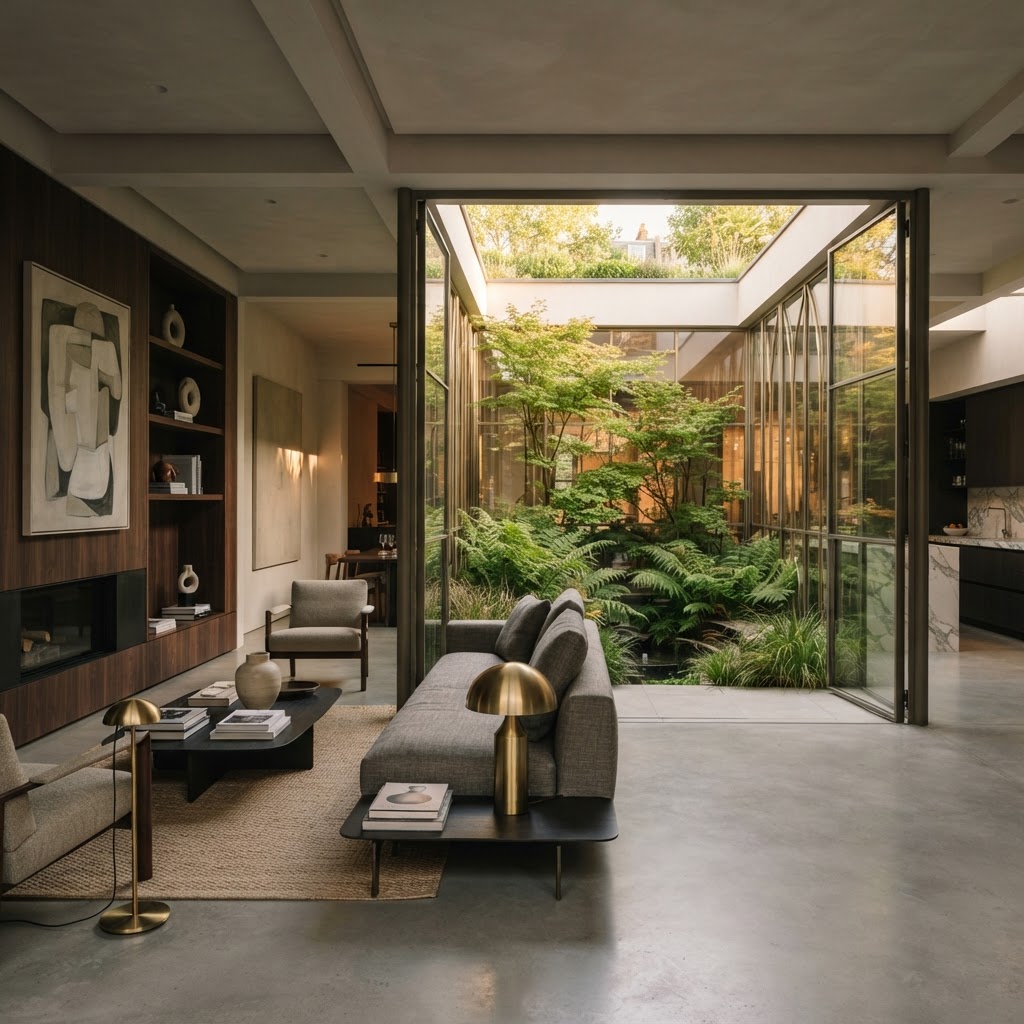
The integration of biophilic design has moved beyond a simple 'green wall.' At a recent project in a sprawling Surrey estate, designers have implemented full-scale, glass-encased internal courtyards that regulate the entire home's humidity and air quality, creating a living, breathing ecosystem. This is architecture that functions like a biological organism, responding to light cycles and seasonal shifts to enhance the inhabitant's circadian rhythm.
The Materiality of Modernism
When it comes to materiality, we are witnessing a return to brutalist honesty softened by artisan craftsmanship. Brands like Orior and bespoke stone suppliers such as SolidNature are seeing a surge in demand for rare, monolithic marbles—think deep emeralds and bruised purples—honed to a matte, tactile finish. It is the antithesis of the 'high-gloss' decade of the 2010s. The focus is now on raw texture, sensory experience, and carbon-negative footprint. Architecture is no longer just about how a space looks on a social feed; it is about how the material speaks to the touch.
Tech-Integration: The Silent Servant
The most sophisticated homes today are those where the technology is entirely invisible. Systems by Savant or Crestron are being eclipsed by bespoke, AI-integrated infrastructures that learn the preferences of the owner—anticipating the perfect ambient light for a dinner party or adjusting acoustics based on the presence of guests. It is 'frictionless living.' As one lead architect remarked, 'If you can see the technology, it is not luxury. Real luxury is the seamless facilitation of life.' As we look toward the final quarter of 2026, it is evident that the new direction of luxury architecture is less about the grand statement and more about the profound, singular experience of place. The homes of the future are not just structures; they are curated extensions of the individual’s own desire for health, longevity, and timeless aesthetic resonance.