
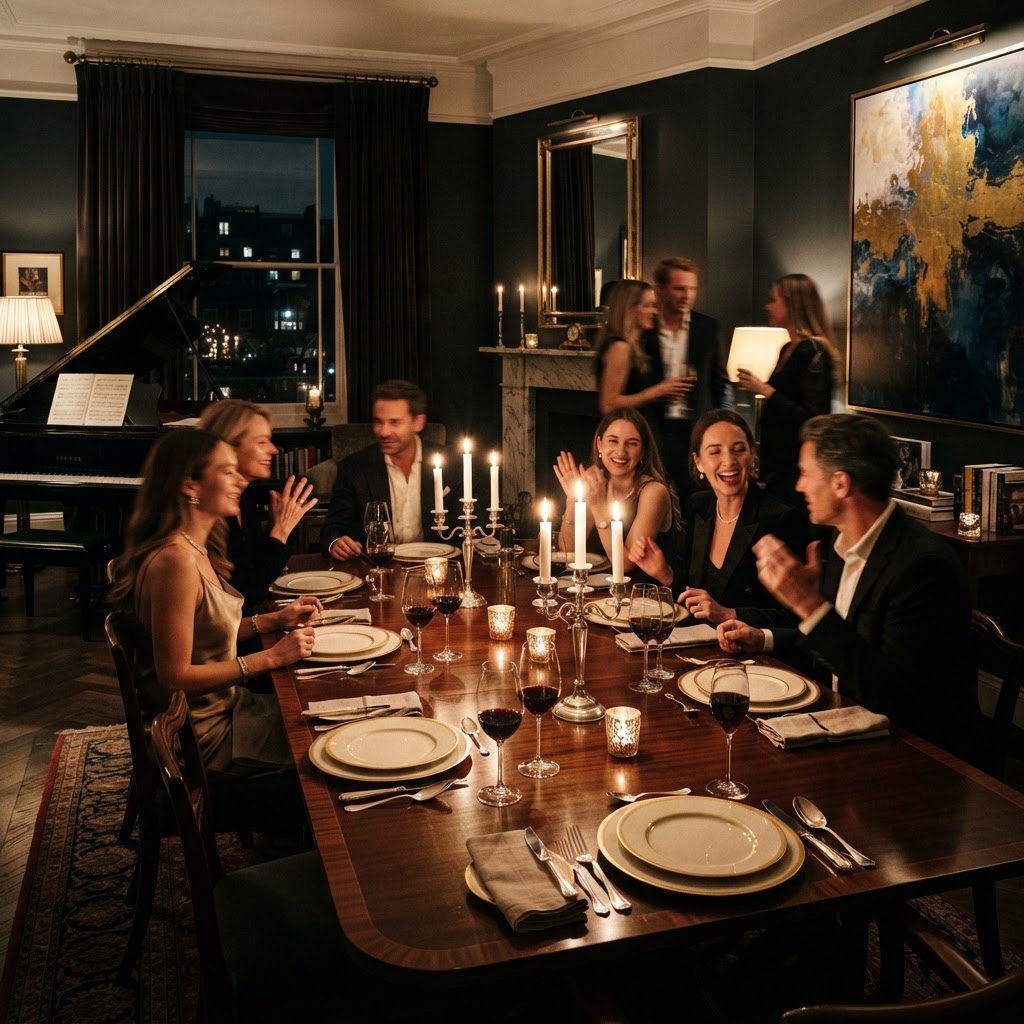
The velvet ropes of the private club are no longer the ultimate status symbol. In the hushed, gilded corridors of Chelsea and Belgravia, a quiet revolution is taking place—one that trades the neon-lit frenzy of the West End for the intimate, curated elegance of the private residence. As we move through the final quarter of 2026, the luxury house party has returned with a vengeance, shifting from a nostalgic pastime to the definitive stage for London’s cultural elite.
The Architecture of Intimacy
For the modern high-net-worth host, scale is no longer the objective; it is curation. The current trend eschews the sprawling, impersonal gala in favour of the 'Salon,' a harkening back to the intellectual and artistic gatherings of the 18th century. 'It is about the chemistry of the guest list,' explains Julian Vane, a premier London event designer whose clientele includes royalty and tech titans. 'Our clients are looking for meaningful intersection. They want the celebrated ballerina from the Royal Opera House sitting across from a contemporary curator at the Saatchi Gallery. It is about fostering discourse, not just providing a glass of Dom Pérignon.'
Curation as the New Currency
The logistics of these evenings are Herculean. To host effectively today requires more than a hired bar; it necessitates a sensory narrative. We are seeing a surge in 'bespoke acoustics,' where private string quartets from the Academy of St Martin in the Fields are commissioned for living room performances, transforming a drawing room into a private concert hall. The menu, often designed by private chefs who have cut their teeth at The Ledbury or Core by Clare Smyth, focuses on micro-seasons and rare provenance—think hand-foraged botanicals paired with vintage Krug selections that never see the shelves of a standard retailer.
The essence of true luxury in the domestic sphere is the feeling of ease. A party that feels choreographed is a failure; a party that feels like a serendipitous collision of minds is the pinnacle of art.
The Post-Club Era
Why this shift? The digital exhaustion of the public eye has rendered the 'public' venue increasingly less desirable. In an age where every movement in a club is documented, the private residence offers the ultimate luxury: discretion. The new house party is a fortified enclave where the phones are left at the foyer, and the evening is dictated by the rhythm of the conversation rather than the beat of a house track. This is where the real power-broking occurs, far from the prying eyes of the paparazzi and the noise of the social media circus.
Brands have taken notice. High-jewellery houses are increasingly sponsoring these private dinners, not as billboards, but as quiet aesthetic partners. A Boodles centerpiece, an installation by a Damien Hirst protegé, or a bespoke scent profile created by Roja Parfums—these are the subtle flourishes that define the new hierarchy of hosting. It is sophisticated, it is exclusive, and it is profoundly private.
As we look toward the winter season, the invite list for these gatherings is the most sought-after commodity in the capital. To attend is to be part of an unfolding cultural dialogue, one that reminds us that the finest experiences in London aren't found on a velvet rope, but behind a heavy, brass-knockered door in Chelsea.