
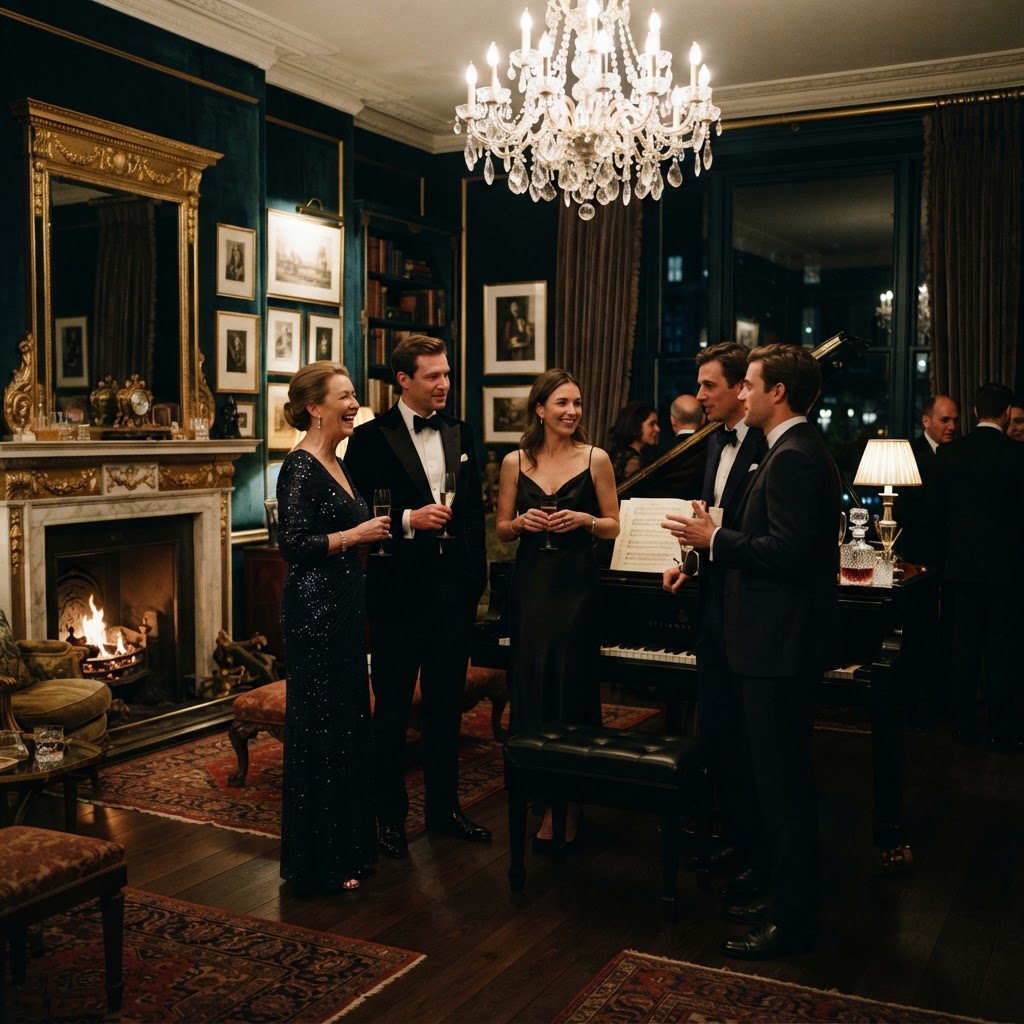
In the velvet-draped corners of a Chelsea townhouse, far from the flashbulbs of the red carpet and the sterile exclusivity of corporate gala tables, a quiet revolution is unfolding. London’s high society, long accustomed to the spectacle of the season’s grandest public affairs, is retreating. The new currency of social standing is no longer the guest list of a thousand, but the precisely curated assembly of twelve.
The Shift Toward Intimacy
The post-pandemic social fatigue has birthed a desire for something more substantive. We are witnessing a decisive migration from the gilded hotel ballroom back to the private residence. According to society event planner Julian Sterling, "The luxury house party today is about sensory orchestration. Clients are moving away from overt displays of wealth and toward what I call 'quiet excellence'—bespoke menus by private chefs, lighting designed to flatter, and entertainment that feels like an accidental encounter with genius."
Curating the Modern Salon
The contemporary host acts less like an event manager and more like a patron of the arts. It is common now to see a private string quartet performing in a Knightsbridge drawing room, or a celebrated artist providing a live, informal critique of a new commission over glasses of vintage Krug. This is the new 'Salon,' where the boundary between cultural highlight and social gathering dissolves.
The true luxury of a house party is the removal of the velvet rope. It is the restoration of conversation as the primary form of entertainment.
Take, for instance, the recent series of soirées held by a prominent collector in Belgravia. Eschewing the traditional buffet, the host commissioned a multi-course menu that echoed the themes of the current exhibition at the Saatchi Gallery. This thematic synergy elevates the gathering from a party to a cultural experience, ensuring that every guest—from the creative director to the venture capitalist—leaves with something to ponder.
The Architecture of the Evening
Attention to detail has reached an almost pathological level of refinement. Linens are monogrammed, floral arrangements by McQueens are architectural rather than botanical, and the bar service is curated to provide rare spirits often impossible to secure through standard channels. For the host, the objective is to create an environment where the most interesting people in London feel completely at ease.
"It is the art of being invisible," says Lady Arabella Harcourt. "A great party should feel organic. Guests shouldn't see the staff; they should simply find their glass refilled, their coat collected, and their conversation seamlessly facilitated by the flow of the room."
The Role of the Performer
Entertainment has also evolved. The era of the loud, disruptive live band is waning, replaced by intimate, acoustic sets. Last month, a private residence in Chelsea hosted a soloist from the Royal Opera House for an unamplified performance that brought the room to a reverent hush. This is the ultimate status symbol: talent brought out of the institution and placed into the personal sphere, transforming a drawing room into a private stage.
Ultimately, the return of the house party is a rejection of the performative nature of digital social life. It is an investment in human connection, conducted with the resources of an empire and the discretion of a secret society. As we head into the deepest part of the London winter, one thing is certain: the most sought-after invitations are those that will never appear on a printed card, but are whispered over a martini in a room that few will ever see.