
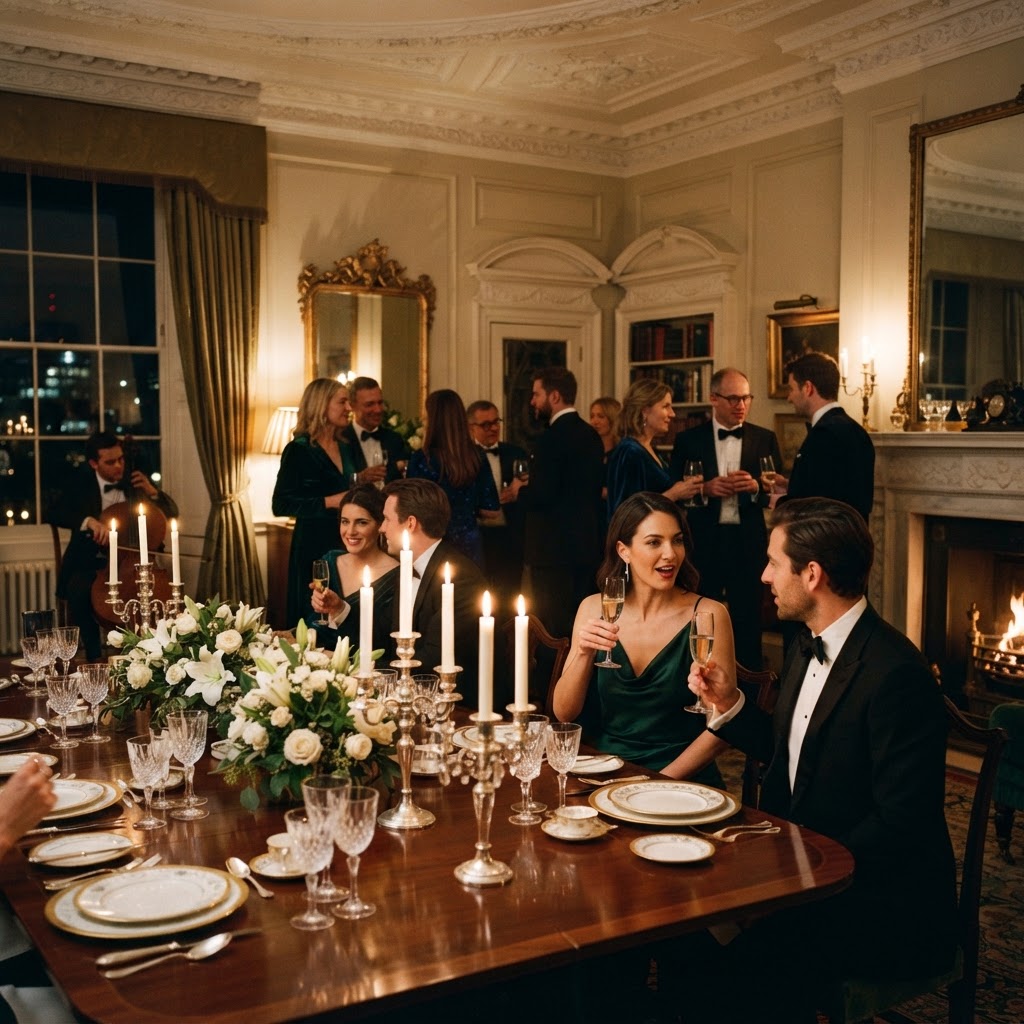
In the velvet-draped drawing rooms of Chelsea and the meticulously restored townhouses of Belgravia, a quiet revolution is taking place. For years, the high-society calendar was dictated by the sheer scale of the gala—the charity ball, the sweeping red carpet, the curated chaos of the blockbuster exhibition opening. Yet, as we settle into the autumn season of 2026, the city’s most discerning hosts are retreating from the glare of public venues in favor of a rediscovered art form: the modern luxury salon.
The Curated Guest List
"There is a profound fatigue associated with the performative," notes Lady Eleanor Vane, a prominent host and patron of the Royal Opera House. "Today, true exclusivity isn't about how many people you can invite, but how seamlessly you can curate a conversation. My guests don't want a loud DJ; they want a private performance by a soloist from the London Symphony Orchestra, enjoyed with a glass of 2012 Dom Pérignon between courses." This shift toward the intimate represents a return to the roots of London's social hierarchy, where the most sought-after invitation is the one that promises anonymity, excellence, and intellectual friction.
Bespoke Experiences in Private Settings
Modern entertainment has become deeply artisanal. It is no longer enough to serve vintage Krug; the provenance of the evening must be singular. We are seeing a surge in demand for private chef experiences curated by culinary luminaries like Hélène Darroze, who are increasingly taking their expertise into private dining rooms rather than commercial kitchens. These events are often punctuated by ‘micro-concerts’—private recitals held in drawing rooms where the acoustics of Victorian architecture provide a warmth that no concert hall can replicate. Recently, a notable Chelsea host transformed her entire garden into a temporary immersive gallery for a rising star from the Saatchi collection, allowing guests to view works under the moonlight before they were even unveiled to the public.
The true luxury of our time is not money; it is the privilege of proximity to genius, in a space that feels entirely like home.
This isn't merely about opulence; it is about the elevation of culture. At a recent dinner in Eaton Square, guests were treated to an impromptu masterclass on the future of ballet by a retiring principal dancer, followed by a tasting of rare whiskies curated by The Macallan’s archival team. The atmosphere was electric, devoid of the stifling protocol of public functions. It was, in every sense, the antithesis of the celebrity-saturated premiere.
The Aesthetics of the Evening
The visual language of these gatherings is understated. We are moving away from the gaudy displays of the past decade toward an aesthetic of 'quiet luxury.' Think candlelight casting long shadows over Baccarat crystal, bespoke floral installations by Rebel Rebel that appear to have been plucked from a wild, overgrown garden, and table settings that prioritize tactile experiences—heavy linens, hand-blown glassware, and handwritten menus that double as keepsakes. It is an aesthetic of deliberate, thoughtful restraint.
As the city looks toward the coming winter, the message is clear. Londoners are reclaiming their private spaces as the ultimate venues for intellectual and cultural exchange. In these intimate settings, the boundaries between host, guest, and performer blur, creating an environment where the most profound connections are made. The house party has returned, and it is more sophisticated, more intentional, and more luxurious than it has ever been.