
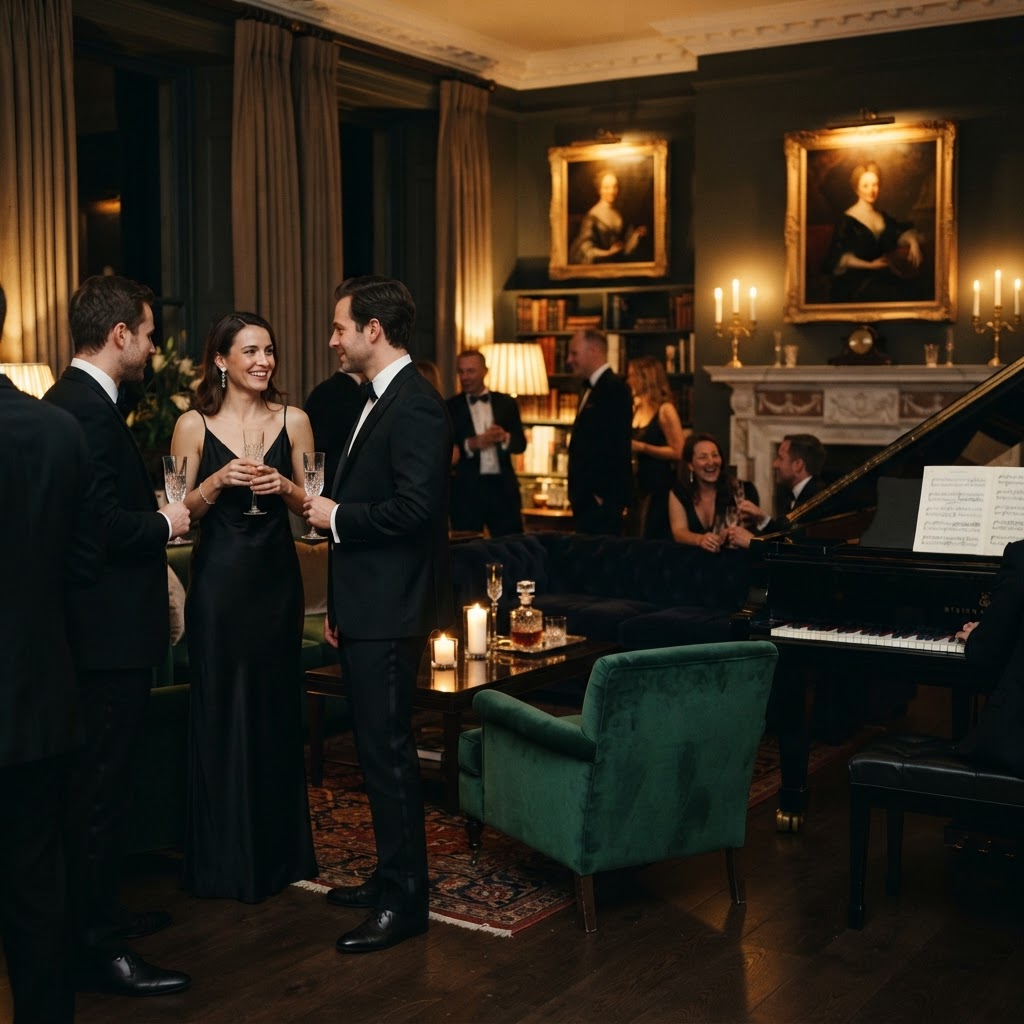
In the rarefied air of Belgravia and the tree-lined crescents of Chelsea, a quiet revolution is unfolding. For years, the social calendar of the ultra-high-net-worth set was defined by the public spectacle—the charity gala at the V&A, the premiere at the Royal Opera House, or the champagne-drenched art opening at Saatchi. Yet, as we look toward the close of 2026, the epicentre of London’s social gravity has shifted. The grandest nights of the season are no longer being curated by venue managers, but by the masters of the private residence.
The Architecture of Intimacy
The contemporary house party, as re-imagined by London’s social elite, is a far cry from the amateurish gatherings of yesteryear. It is a highly choreographed production, often involving a creative director, private chefs trained at three-Michelin-starred institutions, and an invitation list that reads like a hybrid of the Fortune 500 and the Royal Academy’s most coveted contributors. The focus has turned inward, prioritizing privacy, bespoke storytelling, and the kind of unhurried luxury that public spaces simply cannot afford.
The house party is the new theatre. When you remove the velvet rope, you aren't removing the exclusivity; you are enhancing the intimacy. A guest list of thirty, curated to spark intellectual friction, is far more potent than a ballroom of three hundred.
From Art Galleries to Drawing Rooms
Part of this resurgence is inextricably linked to the Chelsea arts scene. Collectors are increasingly eschewing the public auction house for private viewings in their own homes. Consider the recent rise of the 'salon' model, where a private performance by a Royal Ballet principal dancer or an avant-garde chamber quartet provides the evening's entertainment. These moments, set against the backdrop of world-class private collections, foster a level of conversation that is stifled by the performative nature of larger premieres.
The Curated Night
Modern hosts are treating their homes as immersive environments. We see the integration of multisensory technology—bespoke soundscapes designed by London’s premier acoustic engineers and lighting schemas that mimic the soft, cinematic glow of a sunset. The catering, too, has evolved. Rather than a standard buffet, hosts are collaborating with the likes of The Wolseley Hospitality Group or private culinary maestros like those fostered at Le Cordon Bleu, bringing the 'pop-up' experience into the townhouse. Imagine a bespoke cocktail bar, helmed by a mixologist from Connaught Bar, serving liquid gold crafted to match the tasting notes of a rare vintage cognac.
A Return to Substance
Why this movement now? Perhaps it is a reaction to the digital noise of the last decade. There is a profound desire for the analogue experience—the physical touch of a heavy, cream-stock invitation, the lack of cameras, and the absence of the 'social media gaze.' The luxury house party of 2026 is a sanctuary where the city's power brokers can drop their guard. It is a place where the next significant philanthropic venture or art acquisition is often discussed over an espresso martini, long after the rest of London has gone to sleep.
As we look forward to the winter season, the trend is clear: the best seat in town is no longer at the theatre—it is, quite simply, in the drawing room.