
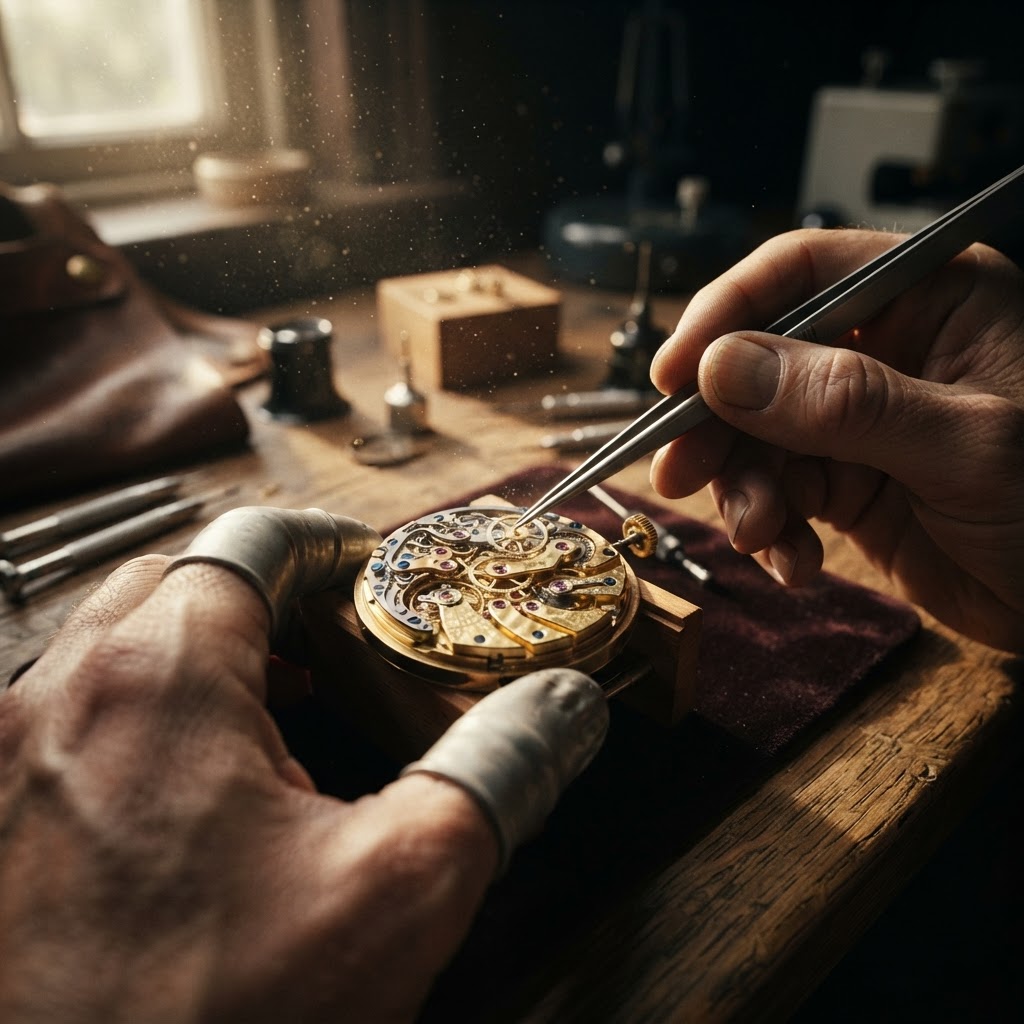
In the quiet corners of Mayfair and the discreet workshops of Geneva, a silent revolution is underway. For the modern collector, the pursuit of luxury has shifted away from the acquisition of limited editions toward the singular, irreplicable act of creation. The bespoke watch—a horological fingerprint designed by one for one—has become the ultimate currency of taste.
The Architecture of Intimacy
As Isabella Thornton discovers, there is a profound difference between owning a timepiece and collaborating on its very soul. Unlike a standard haute horlogerie piece, a bespoke commission demands a dialogue. It begins not with a catalogue, but with an open sketchbook. Whether working with the storied artisans at Vacheron Constantin’s 'Les Cabinotiers' or the independent visionaries at Philippe Dufour, the process is akin to commissioning a portrait; it is an exercise in vulnerability and precision.
The value of a bespoke timepiece is not found in the gold or the complications, but in the months of whispered correspondence between the master watchmaker and the patron.
Beyond the Complication: A Narrative in Metal
True luxury today is defined by the absence of the commonplace. Collectors are increasingly requesting bespoke movements that reflect their specific philosophies. We see dials crafted from meteorites sourced from specific coordinates or bridges engraved with family mottos hidden beneath exhibition casebacks. This is horology as biography. In the private members clubs of St. James, the conversation has moved from the rarity of a reference number to the narrative behind a custom complication.
The Curator’s Perspective
Renowned collector Julian Halloway notes that the allure is twofold: the psychological satisfaction of the process and the rarity of the final object. 'When you engage in a bespoke commission, you aren't just buying a watch,' Halloway explains over lunch at Scott’s. 'You are securing a seat at the table of history. You are witnessing the marriage of traditional finishing techniques—anglage, black polishing, perlage—with your own idiosyncratic aesthetic.' For the collector, this creates a bond that surpasses the fleeting joy of a standard luxury purchase.
The Longevity of Legacy
In a world of fast-moving trends, the bespoke watch remains an anchor. It is a family heirloom by definition, infused with the DNA of the original owner. As we observe in the current market, these pieces rarely appear at auction houses like Christie’s or Sotheby’s. They are held close, passing from generation to generation, serving as the horological anchors of family fortunes. In the rarefied air of bespoke horology, time is not merely tracked; it is curated, personalized, and immortalized.