
The Return of the Super Tourer
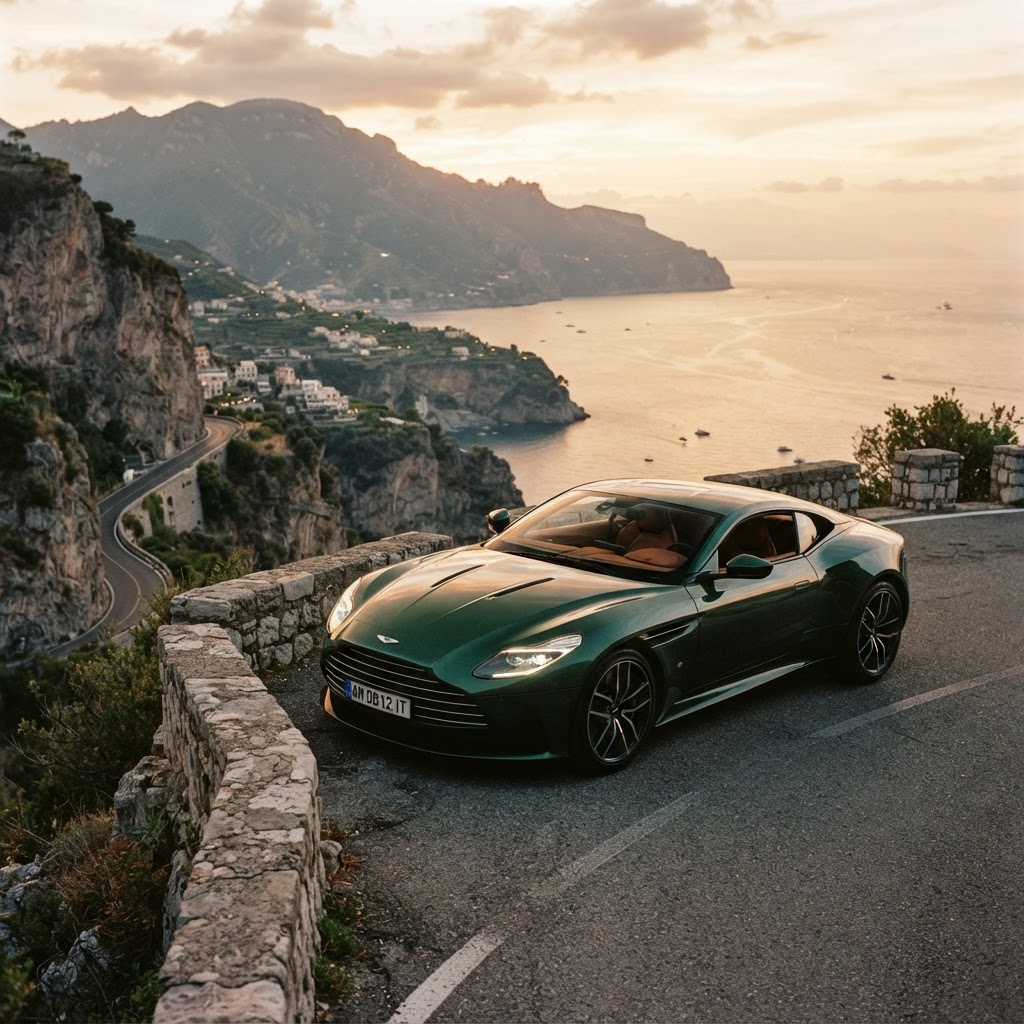
There is a specific cadence to the way a true Grand Tourer should carry itself—a whispered promise of arrival, underpinned by the roar of a captive tempest. As I steered the Aston Martin DB12 along the winding, salt-sprayed ribbons of the Amalfi Coast, it became abundantly clear that Gaydon has not merely updated a model; they have redefined the very architecture of desire. While the automotive landscape pivots toward the sterile efficiency of battery-powered transit, the DB12 stands as a defiant, glorious monument to the combustion engine, cloaked in the finest Connolly leather.
Refinement Meets Raw Power
It is fashionable in certain circles of Mayfair to compare the DB12 to its continental peers, namely the Bentley Continental GT or the more clinical offerings from Porsche. Yet, to categorize the Aston is to miss the point entirely. Where a Rolls-Royce Wraith offers the serenity of a private jet, and a Ferrari 296 GTB provides the visceral terror of a track-bred weapon, the DB12 occupies the rare, sophisticated middle ground. Its 4.0-liter twin-turbo V8, hand-assembled with the precision of a Swiss timepiece, delivers a staggering 671 brake horsepower. It is a car that demands your respect, but rewards your audacity.
A Masterclass in Bespoke Craft
Stepping into the cabin is an exercise in tactile indulgence. Every surface that is not sculpted from carbon fiber is swathed in hand-stitched Bridge of Weir hide. The switchgear, mercifully preserved as physical manifestations of engineering rather than glass-screen abstractions, offers a weight and resistance that is entirely absent in the modern digital age. During my breakfast at the Villa Cimbrone, I spoke with a collector who recently traded his vintage E-Type for this machine. His verdict? 'It is the first modern car that doesn't feel like a computer. It feels like an inheritance.'
The Gentleman’s Choice
True luxury is not about the absence of noise, but the orchestration of it; the DB12 conducts its engine note with the precision of a symphony, and the ferocity of a riot.
On the track, the DB12 behaves with a composure that belies its weight. Its new electronic rear limited-slip differential allows for a dance of power that would make a classic car enthusiast weep with joy. It is playful, yet profoundly stable—a balance that many marques, including the once-vaunted McLaren stable, often struggle to achieve in their ‘touring’ iterations. The bespoke Michelin Pilot Sport 5 S tires, engineered specifically for this chassis, ensure that even on the dampest of hairpin turns, the car maintains an unwavering tether to the asphalt.
The Investment Case
From a collection perspective, the DB12 marks a critical inflection point for Aston Martin. With the brand aggressively pivoting toward limited-run special projects and bespoke coachbuilding via their 'Q' division, the DB12 represents the 'standard' bearer—a baseline of excellence that is destined to become a blue-chip classic. For those holding an investment-grade portfolio of Ferraris and Lamborghinis, the DB12 provides the essential balance of usability and performance. It is a car you drive to the opera on Friday and punish on a private circuit on Saturday.
The Final Verdict
As the sun dipped behind the jagged cliffs, casting a golden light across the sculpted flanks of the Aston, I found myself reluctant to hand back the key fob. We live in a world of excessive choice, where the luxury market is saturated with vehicles that are either too fragile to use or too mundane to enjoy. The DB12 is neither. It is the definitive British retort to a world of homogeneity. It is fast, it is beautiful, and most importantly, it is alive.