
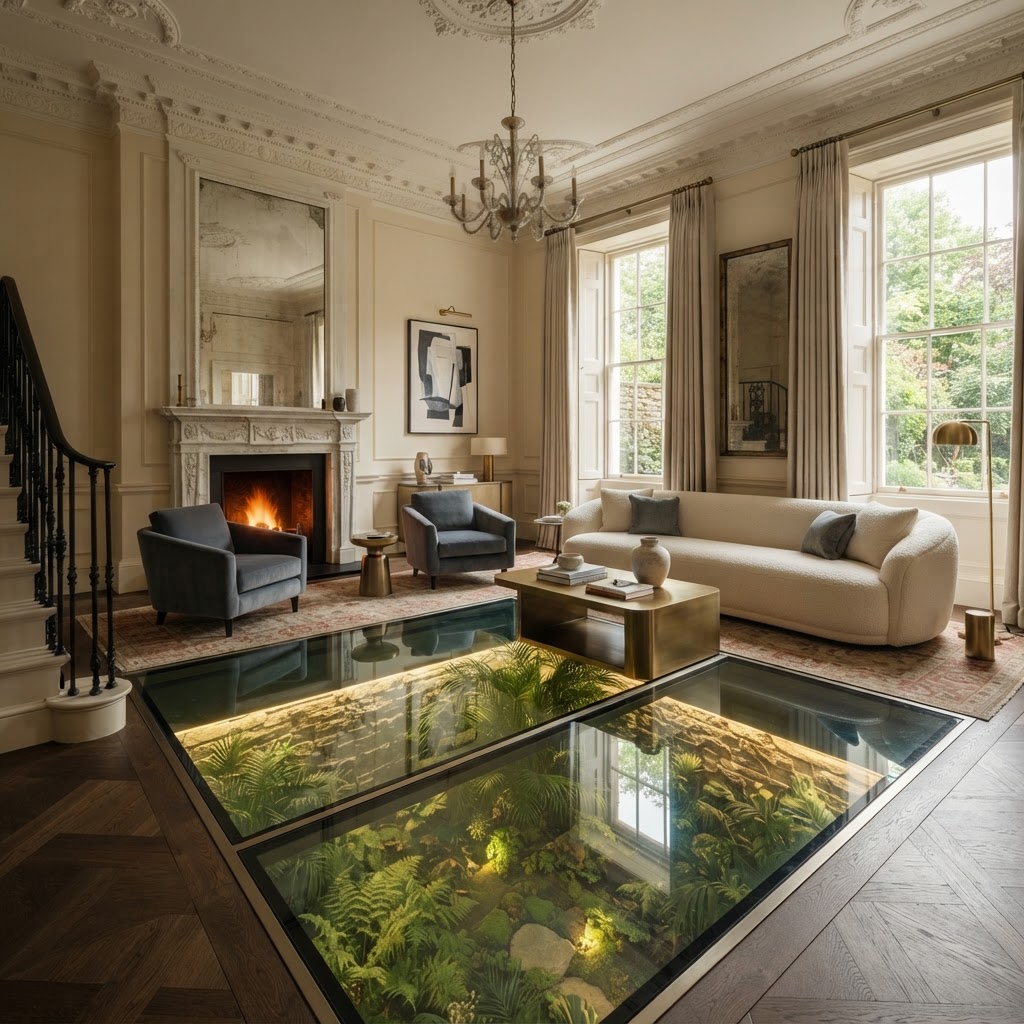
In the quiet, tree-lined crescents of Chelsea and the glittering heights of Knightsbridge, a subtle architectural revolution is unfolding. For decades, the definition of a luxury London residence was anchored in the preservation of heritage—the preservation of the sash window, the stucco façade, and the grand, cavernous entrance hall. However, as the 2026 property market matures, we are witnessing a daring departure: the 'Living Masterpiece.' Architects are no longer merely restoring our townhouses; they are reimagining them as symbiotic ecosystems of glass, wellness, and art.
The Subterranean Renaissance
Perhaps the most significant shift is the movement beneath our feet. No longer relegated to damp basements and utility storage, the subterranean floor has become the heart of the modern home. Architects like those at Foster + Partners are currently pioneering 'light-well engineering,' where multi-level glass atriums channel natural sunlight deep into the foundations of Grade II-listed homes. It is a masterclass in contrasts—original Georgian brickwork housing state-of-the-art wellness suites featuring salt-inhalation chambers and Himalayan salt walls, reminiscent of the private spas at The Aman.
The modern luxury home is no longer a static monument to history, but a dynamic, evolving organism that responds to the inhabitant's well-being.
The Biophilic Shift
Beyond the structural innovations, there is a profound movement toward biophilic design. In the ultra-prime sector, the divide between the internal and external world is dissolving. In a recent development overlooking Cadogan Gardens, floor-to-ceiling retractable partitions by Swiss specialists Sky-Frame have turned drawing rooms into open-air loggias, seamlessly connecting curated vertical gardens with bespoke interiors by Studio Ashby. This is not mere greenery; it is the integration of biodiversity as an architectural feature. Water walls that provide natural air purification and sound dampening have replaced the conventional grand fireplace as the focal point of the living space.
The Curated Interior as Gallery
With the rise of the 'private collector' demographic, interior spaces are being redesigned to serve as museum-grade backdrops. The traditional wallpaper-heavy aesthetic has been discarded in favour of monolithic textures—limewash, Venetian plaster, and rare marbles like Calacatta Viola. Brands such as Promemoria and Minotti are no longer just furniture providers; they are collaborators, creating bespoke sculptural pieces that define the floorplan rather than merely occupying it. As one leading Knightsbridge developer noted, 'We aren't just selling a postcode anymore; we are selling a private gallery space that happens to have a bedroom.'
A Sustainable Future for Heritage
Critics of this movement often fear the loss of London's historical integrity. Yet, current trends suggest the opposite. By integrating hidden renewable energy systems—such as vertical-axis wind turbines integrated into roof parapets and smart-glass thermal regulation—architects are ensuring these homes remain viable for another two centuries. We are seeing a synthesis where heritage conservation meets the zenith of green technology. It is a sophisticated, invisible stewardship of the past. As we look toward the remainder of the decade, it is clear that the future of luxury property in London lies not in the grandiose display of wealth, but in the intelligent, sustainable, and highly personal curation of space.