
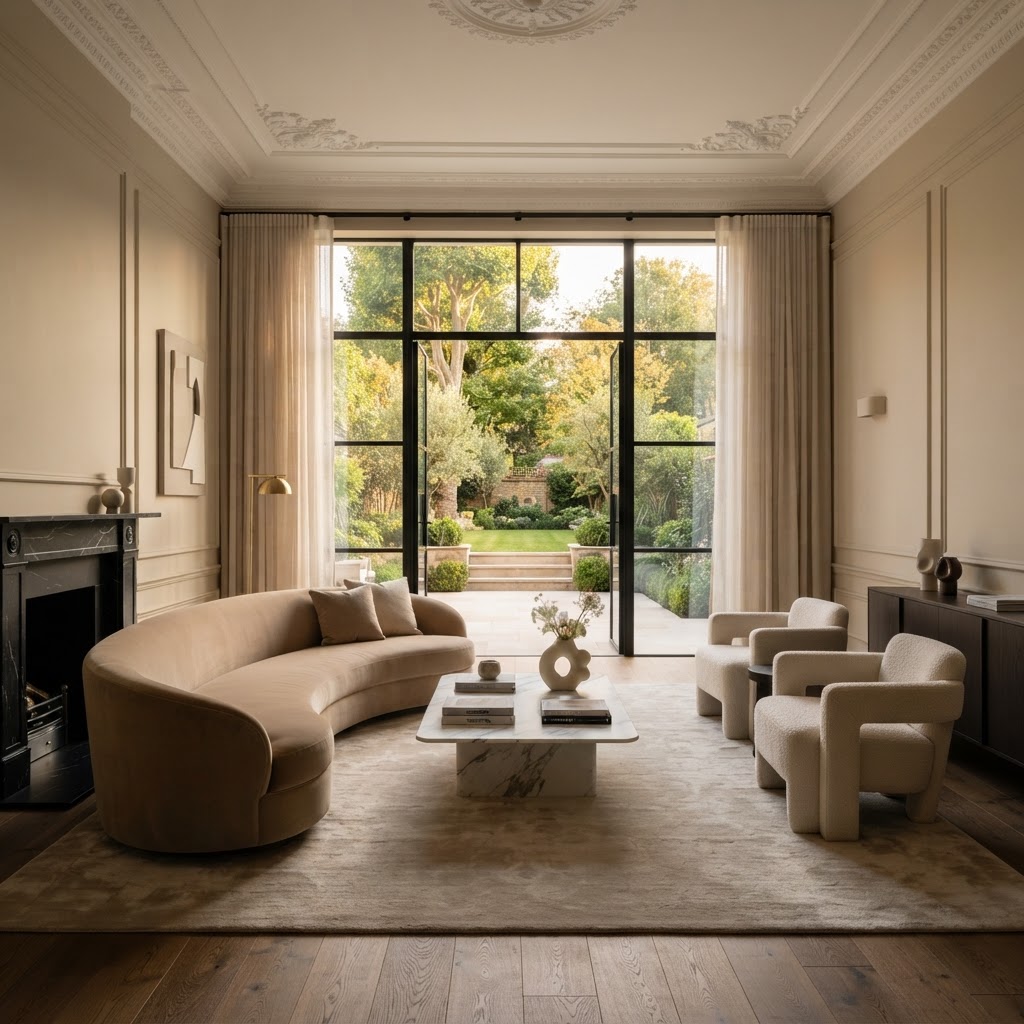
In the rarefied air of London’s property market, the definition of status is undergoing a seismic shift. For decades, the measure of a Chelsea townhouse or a Knightsbridge penthouse was dictated by heritage—an obsession with heritage mouldings, period-correct sash windows, and the weight of history. Yet, as we move through the final quarter of 2026, the elite are trading the stiff formality of the past for a new architectural vernacular: the experiential home.
The Subterranean Renaissance
Today’s ultra-prime buyer no longer settles for a basement. In the deepest reaches of Mayfair, architects are creating 'wellness cathedrals'—multi-level subterranean spas, private cinemas, and wine vaults that feel more like boutique galleries than storage. Leading architects like those at Foster + Partners are increasingly integrating light wells and glass atriums that flood these lower depths with natural daylight, effectively blurring the lines between structural engineering and art.
The luxury of the future is not simply having more space; it is about how that space serves the soul, connecting the inhabitant to light, air, and silence in a city that never stops.
Biophilic Design: The New Luxury Standard
Perhaps the most profound change is the integration of nature. At the recent showcase of a private estate in Surrey, we observed the 'Living Wall' movement at its most sophisticated. It is no longer about a potted fern; it is about glass-enclosed interior gardens that provide a panoramic view of greenery from the master suite. Brands like Poliform and Minotti have shifted their collections to reflect this, introducing textures like raw linen, travertine, and reclaimed walnut that ground the modern home in elemental, sensory experiences.
The Tech-Invisible Aesthetic
Technology has reached a point of invisibility. The intrusive smart-home panels of five years ago have been replaced by intuitive, AI-driven environments that adjust lighting, temperature, and acoustic ambiance based on the homeowner's biometric data. In the reimagined townhouses of Cadogan Square, this means a house that wakes up with you, transitioning from a soft, cool glow at dawn to the warm, ambient light of a private library by evening. As noted by London-based design consultant Julian Thorne, 'The ultimate luxury is a home that anticipates your needs without ever reminding you that it is doing so.'
Curated Permanence
Finally, the era of 'fast luxury' is dead. Investors are moving toward bespoke, artisanal craftsmanship that promises to age gracefully. We are seeing a resurgence in commissions for hand-forged bronze fixtures from artisans like those at Soane Britain, and a preference for stone sourced from specific, heritage quarries in Italy. It is a return to permanence, where a house is not just a high-value asset, but a family legacy designed for the next century.
As London’s skyline evolves, so too does our understanding of home. It is no longer about the prestige of an address—though that remains vital—but the sophistication of the life lived within those four walls. In the quiet, considered details, we find the true direction of architecture today: a move toward serenity, sustainability, and absolute, uncompromising individual expression.