
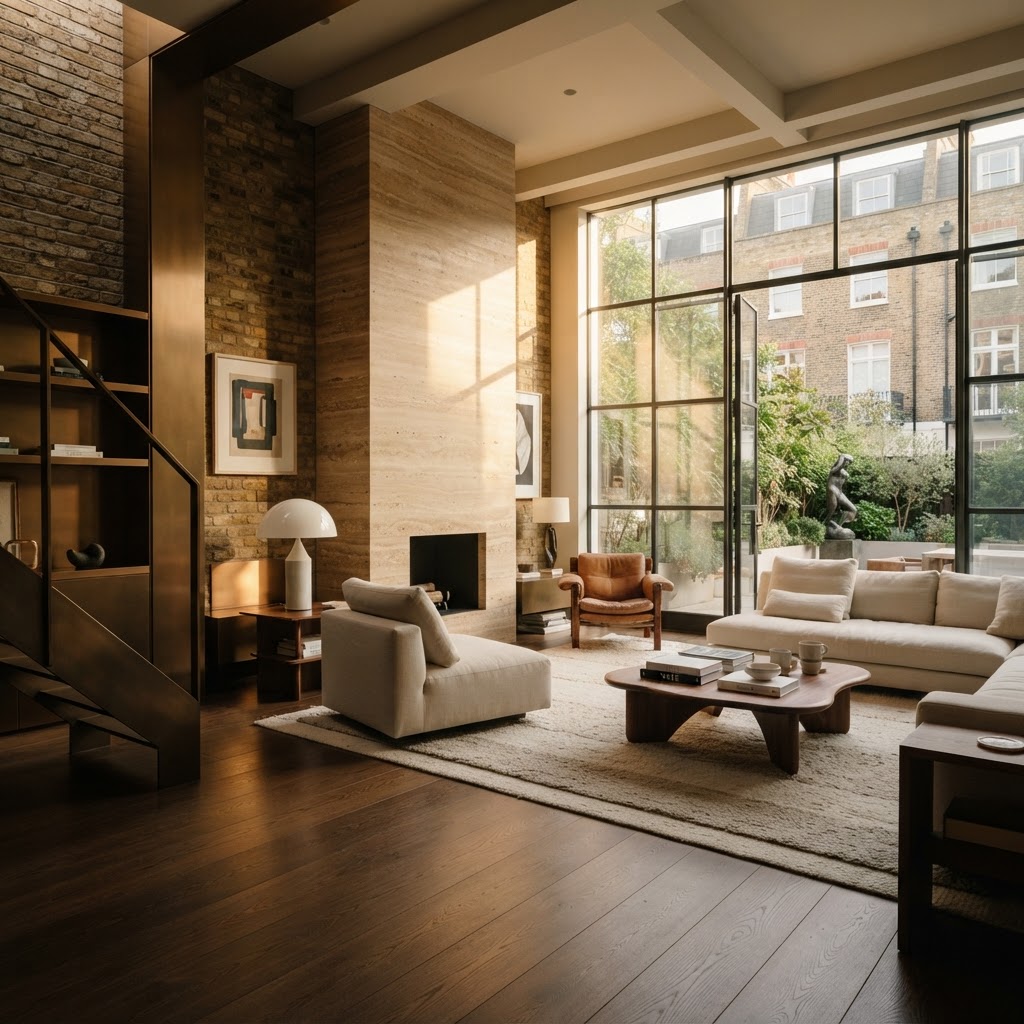
In the quiet, cobblestoned reaches of Chelsea and the gleaming heights of Knightsbridge, the definition of the 'trophy home' is shifting. For decades, the London elite defined luxury through the lens of preservation—the perfectly restored Victorian façade, the meticulously polished sash window. Today, however, we are witnessing a daring architectural pivot: the rise of the sculptural home, where heritage is not erased, but harmoniously tensioned against radical, contemporary intervention.
The Art of the Invisible Extension
The most coveted properties in 2026 are those that defy the limitations of their historical footprints. Architects are increasingly looking inward and downward, creating 'glass lungs' that flood subterranean floors with natural light. At a recent unveiling in a Grade II listed townhouse near Sloane Square, the traditional dark basement was replaced by an expansive, double-height atrium featuring a bespoke staircase by the master craftsmen at E.P. Levine. The result is a seamless transition between the 19th-century history of the exterior and a 21st-century sanctuary that prioritizes wellness and light.
The future of London property lies in the alchemy of restraint and radical engineering; we are building not for the next decade, but for the next century. — Julian Vane, Lead Architect at Vane & Partners
Materiality and the New Tactile Aesthetic
Luxury is no longer solely about the grand gesture; it is found in the tactile. As we move away from the cold minimalism of the early 2000s, architects are embracing materiality that demands to be felt. We are seeing a resurgence of honed travertine, brushed bronze, and bespoke, hand-cast terrazzo surfaces. In a notable penthouse development overlooking Hyde Park, the design team utilized sustainable, locally sourced Portland stone to ground the interior, creating a dialogue between the residence and the very bedrock of the city.
Beyond the City Limits: The Reimagined Country Estate
This architectural evolution is not contained within the M25. The modern country estate has become a canvas for ambitious structural experimentation. From the Cotswolds to the Surrey Hills, the 'Barn Conversion 2.0' has arrived. These homes are shedding their rustic skins in favor of expansive, seamless glazing and integrated smart-infrastructure that remains invisible to the eye. It is the marriage of Boffi kitchens, bespoke Italian marble, and automated climate systems that are as responsive as they are unseen.
The Legacy of the Bespoke
Ultimately, the new direction of architecture in London’s ultra-prime market is fundamentally artisanal. It is about the partnership between the discerning homeowner and the visionary designer. Brands like Minotti and Promemoria are becoming essential collaborators in the build process, ensuring that the furniture and the architectural shell share a singular, coherent identity. As James Hartley, your editorial voice, observes: we are witnessing the end of the 'off-the-shelf' luxury home and the dawn of the architectural masterpiece, crafted specifically for the individual who views their property not as an asset, but as a living piece of art.