
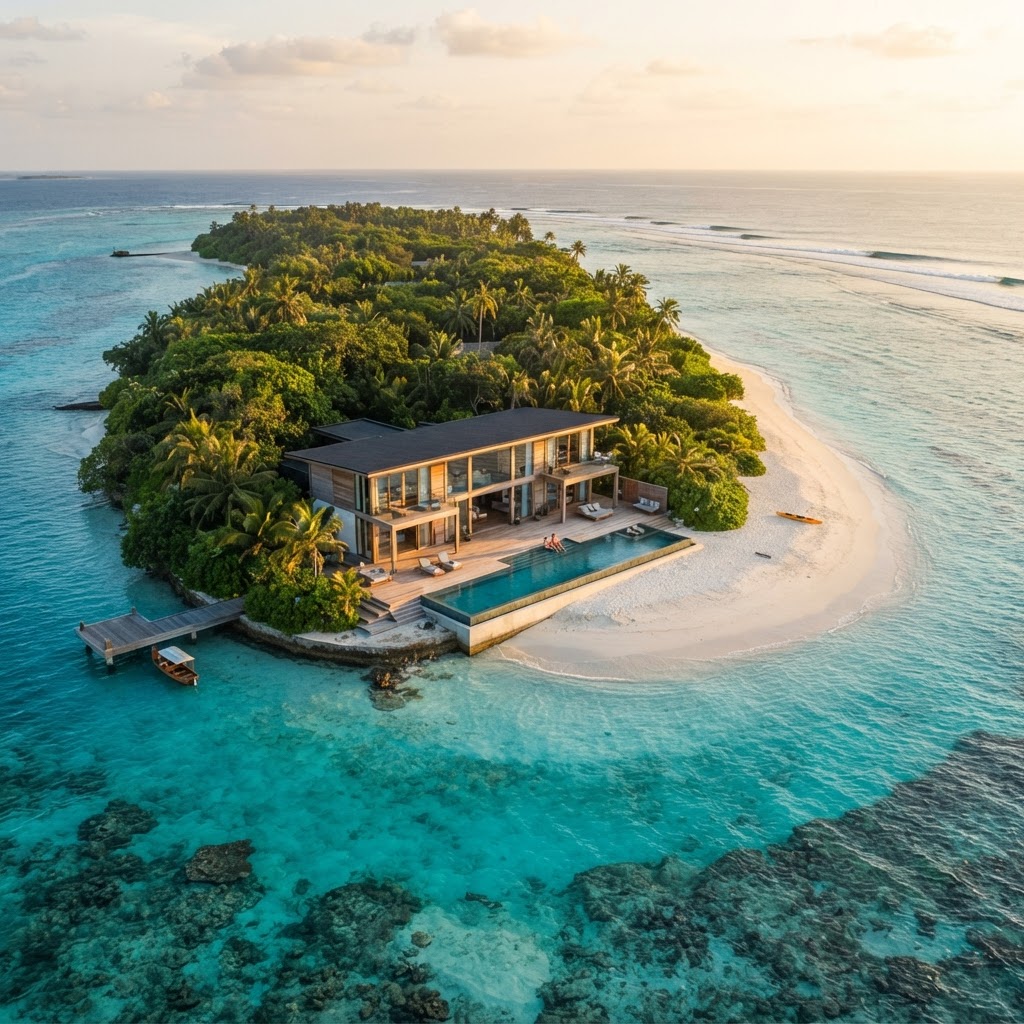
In an era where connectivity is constant, the ultimate luxury is no longer access; it is the privilege of being unreachable. As we look toward 2026, the elite traveler is eschewing the predictably plush corridors of five-star city hotels in favour of total, curated isolation. The new frontier of travel is defined by the private island—not merely as a destination, but as a private ecosystem tailored to the specific whims of the individual.
The Rebirth of Total Privacy
"The discerning traveller is no longer satisfied with a villa that simply offers a sea view," explains Marcus Thorne, director of bespoke travel consultancy LuxeVoyage Global. "They are seeking hyper-personalised territories. In 2026, the focus has shifted from high-gloss opulence to biophilic architecture and absolute environmental seclusion. It’s about being the only guests on an island that feels like it was conjured specifically for your arrival."
Laucala Island, Fiji: The Gold Standard
While global trends shift, the iconic status of Laucala remains undisputed. Owned by the Red Bull magnate, the island continues to redefine the boutique resort experience. With 25 villas scattered across the northern coast, it provides a masterclass in scale. Arriving via private charter from Nadi, one is immediately struck by the sheer lack of intrusion. Here, the 'no-menu' dining concept is standard; you do not order food—you simply discuss your cravings with the executive chef, who sources ingredients from the island's organic farms.
In the silence of a private island, we find the true resonance of the self; here, luxury is not what you see, but what you choose to ignore.
The Seychelles: Fregate Island’s Silent Evolution
Perhaps the most compelling trend for 2026 is the 'rewilding' of luxury. Fregate Island in the Seychelles has become the epicentre of this movement. Having recently completed a multi-million-pound refresh, the property now functions as a high-end conservatory. Guests spend their mornings tracking giant Aldabra tortoises with on-site marine biologists before retreating to their cliffside villas, which now feature solar-integrated glass and sustainable cooling systems that remain entirely invisible to the guest experience.
The Logistics of Disappearing
Securing these locations is an art form. The most sought-after villas are rarely listed on public booking engines. Instead, they are accessible only through intimate networks and private concierge services. Whether arriving via a superyacht charter from the Mediterranean or a custom-configured Bombardier Global 8000, the transit is as critical as the stay. The 'first-class experience' has evolved; it is now about the seamless handover—the transition from the tarmac to the speedboat, coordinated to the exact second of your arrival.
The Rise of the Atoll Estate
In the Maldives, the focus for 2026 is moving beyond the resort to the 'Atoll Estate.' Properties like the exclusive Baa Atoll sanctuaries are offering private islands for multi-generational bookings, where the entire geography of the island becomes a family’s private playground. With dedicated butler teams, personal chefs, and on-call dive instructors, these estates represent the pinnacle of what we might call 'sovereign hospitality.'
As we navigate 2026, the mandate is clear: travel is less about the itinerary and more about the sanctity of the space you inhabit. Whether it is the volcanic shores of the South Pacific or the pristine, turquoise lagoons of the Indian Ocean, the world's most exclusive islands offer a rare commodity: a place where time, for once, stops running.