
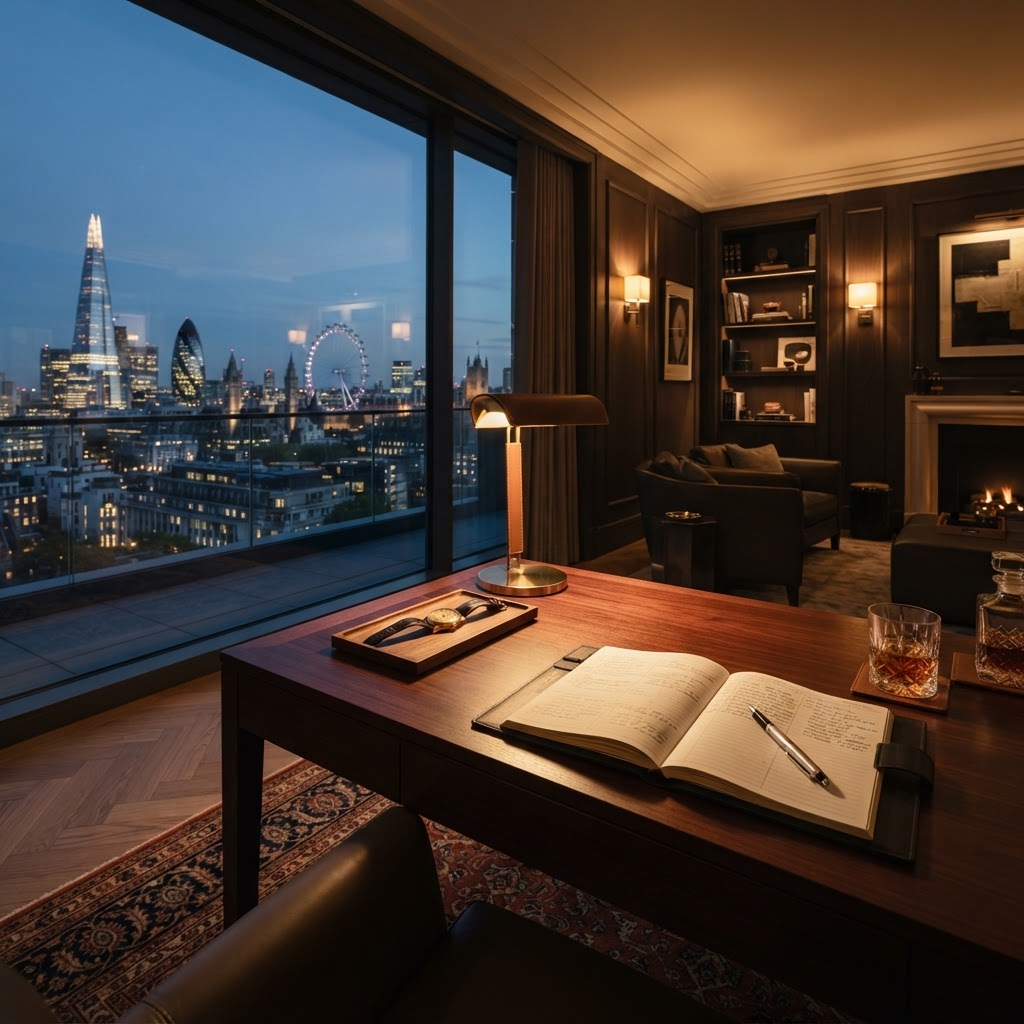
In the quiet, wood-paneled corridors of Mayfair’s most discreet family offices, the traditional 60/40 portfolio is being treated as a relic of a bygone era. For the Ultra-High-Net-Worth (UHNW) individual, market volatility is no longer a risk to be mitigated by bonds; it is a canvas upon which to paint a legacy of compounding wealth through illiquidity and exclusivity. As we navigate the complexities of late-2026, the elite are increasingly turning their gaze away from public exchanges and toward the tangible, the bespoke, and the strategically scarce.
The Rise of Private Market Sovereignty
The smartest capital today is moving into private equity and venture capital with an intensity not seen since the dawn of the dot-com era. Yet, the focus has shifted. It is less about chasing the next fleeting software unicorn and more about securing control over essential infrastructure and high-barrier-to-entry luxury manufacturing. When one speaks with the partners at firms like Goldman Sachs Private Wealth or the specialized desks at UBS, the conversation invariably turns to 'The Great Capture'—the acquisition of controlling interests in supply chains that sustain the luxury ecosystem itself.
In an era of digital transience, the ultimate investment is the one you can touch, hold, and pass down through generations. Real luxury is the rarest form of yield.
The Tangible Premium: Collectibles as Capital
We are seeing a profound intersection between luxury concierge services and sophisticated wealth management. An investment-grade watch, such as a Patek Philippe Ref. 1518, is no longer merely a status symbol; it is an alternative asset class that consistently outperforms the S&P 500 during inflationary cycles. Similarly, private aviation fractional ownership has evolved from a convenience into a strategic asset. By aligning with boutique aviation firms, investors are securing mobility—a currency that remains perpetually undervalued in a fragmented geopolitical climate.
The Vineyard and the Vault
For the family offices of Europe and the Gulf, land remains the bedrock of strategy. However, the appetite has moved beyond traditional real estate. We see a surge in the acquisition of high-yield viticulture in Bordeaux and Tuscany. These are not merely lifestyle pursuits; they are sophisticated, long-term plays on land value and heritage branding. By controlling the entire lifecycle of a grand cru—from the terroir to the auction block at Sotheby’s—investors are insulating themselves from the erratic swings of public market beta.
The Role of the Concierge-Advisor
Perhaps the most fascinating evolution is the fusion of the luxury lifestyle advisor with the financial analyst. The modern family office now employs 'lifestyle intelligence' teams. These experts do more than manage logistics; they provide the boots-on-the-ground research for potential acquisitions. When a client expresses interest in a niche sector—be it sustainable energy infrastructure or rare earth metals—it is the concierge network that identifies the opportunity long before it appears on a Bloomberg terminal.
As we look to the decade ahead, it is clear that wealth preservation is no longer about passive growth. It is about active participation. The most successful portfolios of 2026 are those that treat capital as a tool for creating, rather than just consuming, the extraordinary. In the world of the UHNW, the market is no longer a storm to weather; it is a landscape to be commanded.