
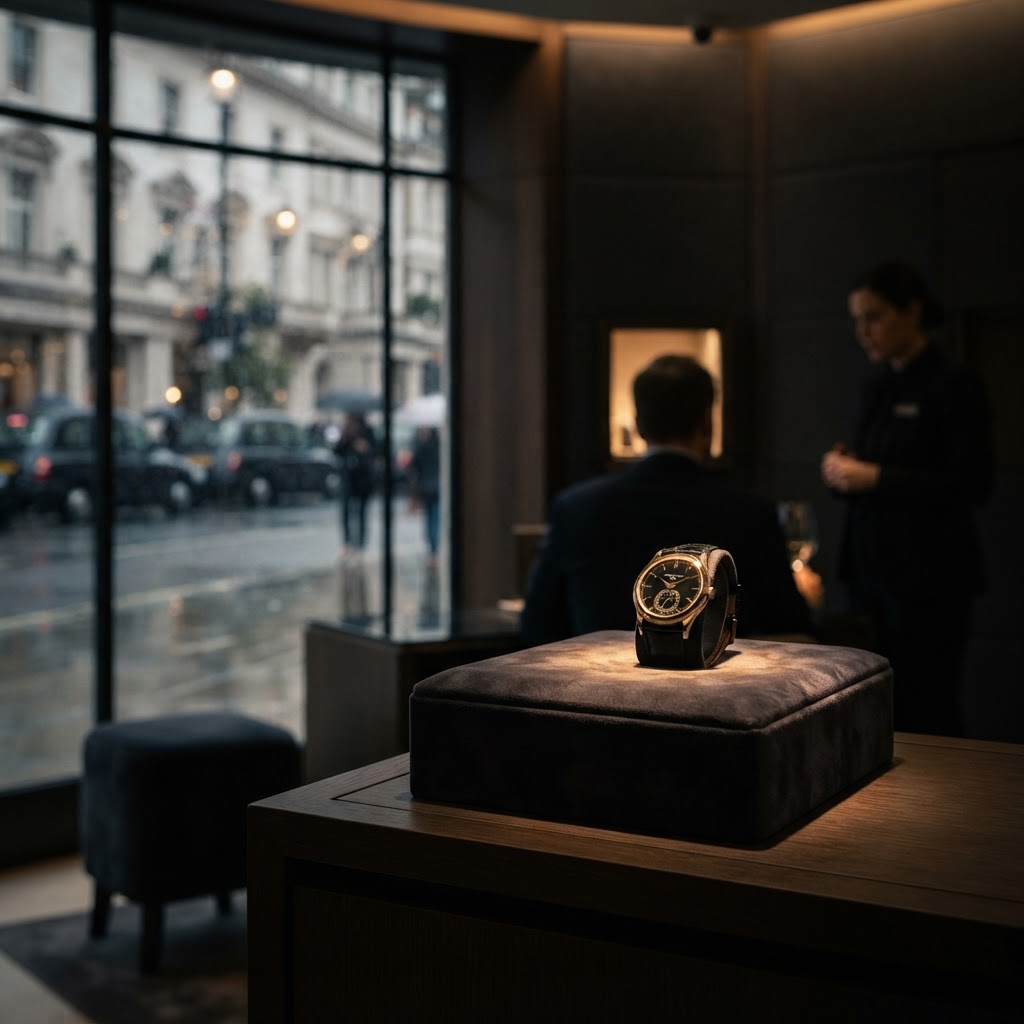
In the rarefied air of London’s private members' clubs, from the discreet mahogany-panelled corners of Annabel’s to the silent, art-filled corridors of 5 Hertford Street, a new consensus is emerging among the global elite. Wealth is no longer merely about the capacity to acquire; it is increasingly defined by the capacity to access what is fundamentally unobtainable to the masses. In a landscape dominated by the democratization of goods, the true hallmark of luxury brand strategy is no longer ubiquity—it is the calculated, elegant, and often brutal application of scarcity.
The Psychology of the Waitlist
For the discerning collector, the 'waitlist' has evolved from a logistical necessity into a status symbol. Take, for instance, the strategy employed by Patek Philippe or the bespoke ateliers of Hermès. These houses do not merely sell products; they curate entry. By decoupling demand from inventory, these brands shift the power dynamic entirely. As Jean-Claude Biver, the titan of Swiss watchmaking, once famously noted, 'The price is not what you pay; it is what you feel when you cannot have it.' This psychological architecture ensures that the object retains its allure regardless of market cycles, turning a consumer good into a robust asset class.
Investment Beyond the Balance Sheet
For family offices and private wealth managers, this strategy of scarcity has transformed luxury assets into pillars of alternative investment portfolios. Fine wine from the slopes of Burgundy, blue-chip contemporary art, and hyper-limited edition automotive masterpieces from the Ferrari Tailor-Made division are now seen as essential hedges against inflationary volatility. When supply is fixed by design rather than demand, the floor value of these items is naturally elevated. It is a philosophy understood perfectly by the private concierge services in Mayfair, who act as the gatekeepers between the hyper-wealthy and the brands that thrive on controlled distribution.
Luxury is a bridge between the physical and the impossible. If you can walk across it easily, the destination loses its significance.
The Retail Theatre of Silence
Observe the shift in luxury retail architecture. The high-street boutique, with its crowded displays and accessible sales associates, is being replaced by the 'appointment-only' salon. Brands like Chanel and Louis Vuitton are increasingly cordoning off their highest-tier offerings in private suites, accessible only to a curated client base. This physical manifestation of scarcity serves a dual purpose: it offers the client the intimacy they demand and reinforces the brand's position as a reward rather than a purchase. This is luxury as an exclusive membership—a silent, unspoken contract between the house and the patron.
The Future of Controlled Desire
Looking toward 2027, we anticipate a further retreat from the digital-first retail model that defined the early 2020s. We are witnessing a 'flight to physicality,' where the ability to touch, smell, and experience a product in a hidden setting becomes the ultimate luxury. For entrepreneurs and investors alike, the lesson is clear: in an age of infinite digital choice, value is found in the physical finite. The brands that will define the next decade are those that possess the courage to say 'no,' to close their doors to the many, and to focus their entire energy on the few who understand that the most luxurious thing one can own is something that cannot be bought anywhere else.