
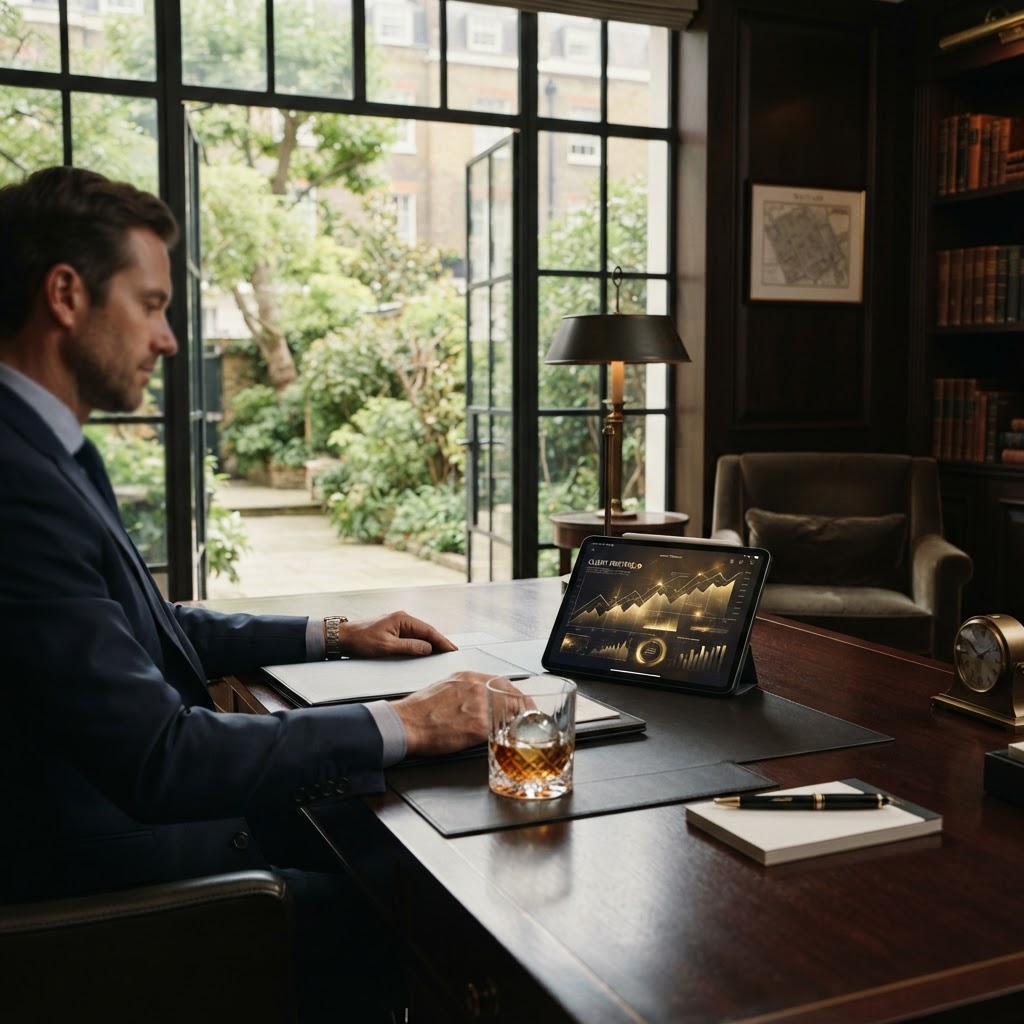
In the quiet, wood-paneled corridors of Mayfair’s most exclusive private banks, the conversation has shifted. By late 2026, the era of the 'standard' portfolio—a predictable blend of equities and bonds—has been relegated to the archives of the twentieth century. For the high-net-worth individual, capital preservation is no longer the primary objective; legacy orchestration and agility are the new gold standards.
The Rise of the Bespoke Family Office
The contemporary UHNW individual no longer views their bank as a mere repository for funds, but as a strategic architect. We are seeing a profound migration toward 'Family Office 2.0,' where private banks partner with boutique firms like Stonehage Fleming or LGT Crestone to offer hyper-customized administrative ecosystems. It is no longer just about investment returns; it is about cross-generational governance, philanthropic impact, and the seamless integration of luxury assets into a broader fiscal strategy.
In an age of digital volatility, the most precious asset is not liquidity, but access. Access to pre-IPO opportunities, to prime real estate in the Maldives, and to the bespoke legal structures that shield a dynasty's future.
The Convergence of Concierge and Capital
Perhaps the most fascinating evolution is the blurring of lines between premium hospitality and wealth management. When a client at Coutts or JP Morgan Private Bank requests a jet to Gstaad or a private viewing at a gallery in Basel, they expect their banker to understand the underlying tax implications of their spending. It is a 'Lifestyle-as-a-Service' model. This creates an environment where a luxury lifestyle isn't just a byproduct of wealth, but a documented component of the client’s holistic balance sheet.
The Asset Class Renaissance
As we look toward 2027, the diversification strategy has moved into the realm of the tangible. Fine wine, vintage motorcars, and rare horology have transitioned from passion projects to institutional-grade asset classes. Private banks are now deploying proprietary AI to track the liquidity of rare Patek Philippes or the appreciation index of private vineyards in Tuscany, integrating these into a unified, encrypted digital dashboard.
The Human Element in a Digital Era
Despite the proliferation of AI-driven wealth management, the human element has never been more vital. The sophisticated client demands a 'trusted consigliere'—someone who can bridge the gap between complex venture capital mandates and the nuanced needs of an evolving family structure. The best banks in London, Zurich, and Singapore are doubling down on this, emphasizing the 'human touch'—long, intimate lunches at The Connaught or private dinners in Knightsbridge—to foster the deep interpersonal trust that algorithms simply cannot replicate.
As we close the final quarter of 2026, the message is clear: wealth is no longer about the accumulation of numbers on a screen. It is about the curation of a life, the safeguarding of a legacy, and the pursuit of unparalleled influence in a globalized, yet deeply personal, market.