
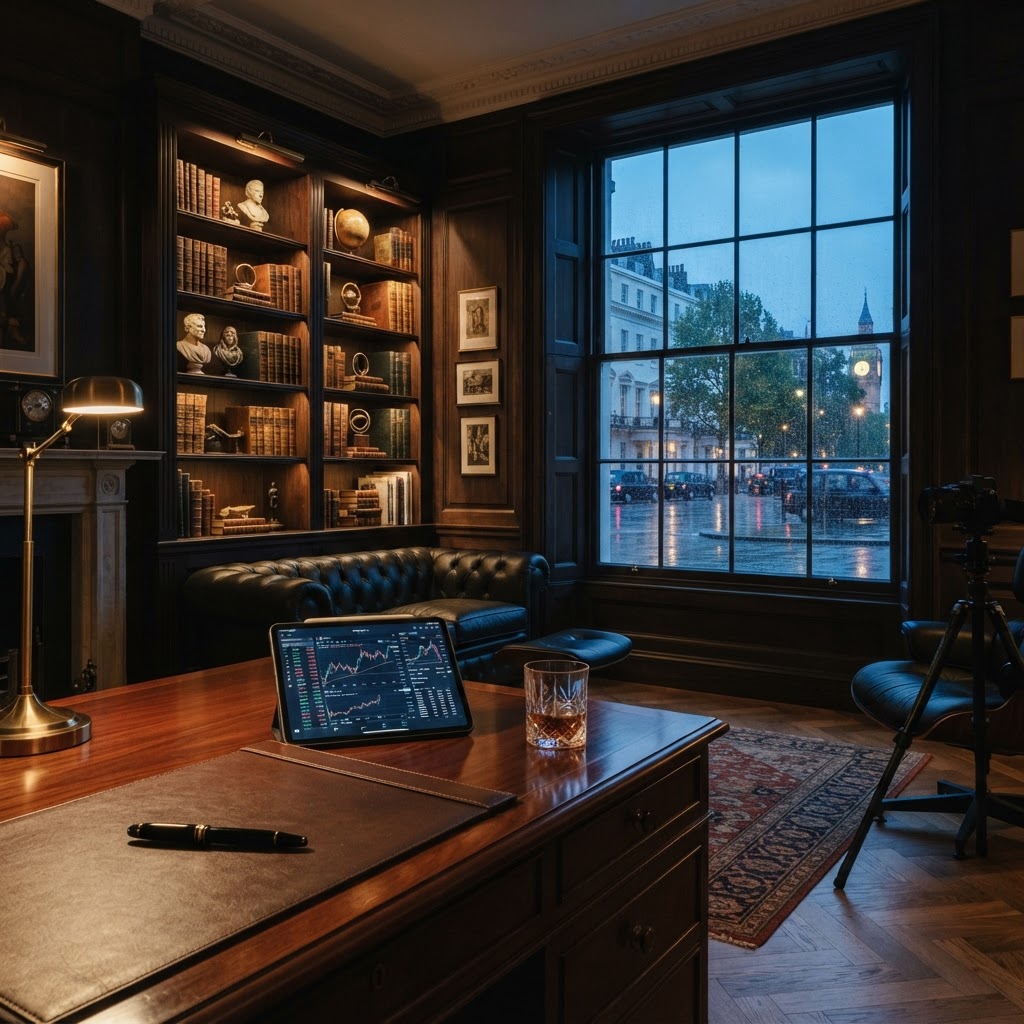
In the quiet, wood-paneled corridors of Mayfair and the glass-fronted boardrooms of Geneva, the definition of wealth management has undergone a seismic shift. As we navigate the complex economic currents of late 2026, the era of passive portfolio management has vanished. Today, for the UHNW individual, private banking has evolved into a bespoke, multi-disciplinary orchestration of legacy, lifestyle, and liquidity.
The Bespoke Architecture of the Modern Family Office
Gone are the days when a single relationship manager could suffice. The ultra-wealthy of 2026 are increasingly gravitating toward 'Family Office 2.0'—a model that blends the institutional rigor of firms like J.P. Morgan Private Bank with the agility of boutique concierge consultancies. According to Elena Vane, a senior strategist at a leading multi-family office in Belgravia, the focus has moved from simple asset allocation to 'total-balance-sheet management.'
True luxury is no longer about the asset itself, but the seamless, invisible efficiency with which that asset is curated and protected.
Strategic Diversification Beyond Traditional Equities
While tech and AI-integrated industries remain staples, 2026 has seen a dramatic pivot toward 'tangible capital.' Rare earth minerals, sustainable vineyards in the Languedoc, and prime commercial real estate in emerging hubs like Riyadh are being sought with a fervor previously reserved for blue-chip art. The art market, too, has become a sophisticated asset class, with tokenized provenance allowing for fractional ownership of masterworks—a trend that the private banks are finally embracing with bespoke digital custody solutions.
The Luxury Concierge as Financial Partner
Perhaps the most fascinating convergence is the dissolution of the boundary between financial management and lifestyle curation. Institutions such as Coutts and UBS are now integrating lifestyle intelligence directly into their wealth reporting. If one is planning an acquisition of a superyacht—such as a hybrid model from the latest Benetti launch—the financing is structured not merely as a loan, but as a strategic asset purchase that accounts for operational costs, charter yields, and potential appreciation in the second-hand market.
The Human Element in an Algorithmic Age
Despite the proliferation of AI-driven predictive analytics that can forecast market shifts with startling accuracy, the premium remains firmly on human intuition. The ultra-wealthy are demanding a 'white-glove' hybrid service. They want the processing power of a machine but the discerning, long-term perspective of a seasoned advisor who understands the nuances of multi-generational wealth transfer—a task that requires profound psychological insight, not just a spreadsheet.
As we look toward 2027, the institutions that thrive will not be those with the most sophisticated algorithms, but those that offer the most human-centric, high-touch ecosystem. In 2026, the elite don't just want their money to work; they want their lives to be choreographed with the same precision, discretion, and quiet elegance that has defined the very best of London’s private banking traditions for centuries.