
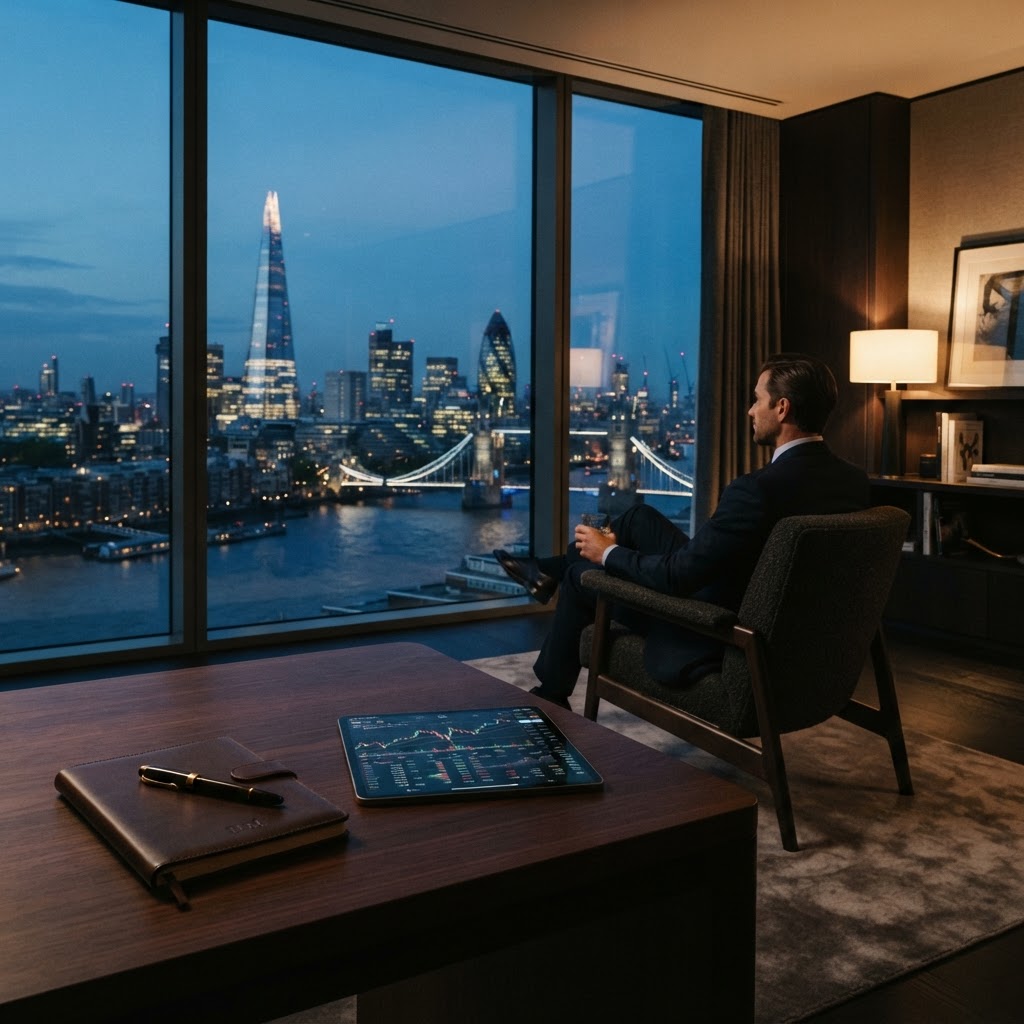
In the rarefied air of Chelsea’s private members' clubs, the conversation has subtly shifted. The discourse of 2026 is no longer merely about the preservation of capital; it is about the architecture of legacy. As we navigate a decade marked by both hyper-innovation and geopolitical volatility, the role of the traditional private banker has been eclipsed by the 'Family Office Concierge'—a fusion of rigorous financial stewardship and bespoke lifestyle curation.
The Hyper-Personalization of Asset Allocation
For the ultra-high-net-worth individual, the standard '60/40' portfolio is a relic of the past. Today, institutions like J.P. Morgan Private Bank and Coutts are increasingly integrating private equity, venture capital in quantum computing, and fractional ownership of rare tangible assets into the core of their advisory models. It is no longer enough to have a liquidity manager; one requires a strategic partner who understands the nuance of a London property portfolio alongside the volatility of deep-tech startups.
In an era of algorithmic noise, the true luxury of wealth is the clarity of human intuition. The banker of tomorrow is a curator of opportunities, not just a manager of ledgers.
The Convergence of Wealth and Wellbeing
We are witnessing a profound merger between private banking and premium hospitality. The 'concierge' service is no longer an ancillary benefit—it is the bedrock of the client experience. Whether it is arranging private medical access in Switzerland or securing off-market real estate in Mayfair, the new private bank acts as a comprehensive ecosystem. Firms such as UBS are now embedding 'wellbeing officers' alongside traditional wealth managers to ensure that financial health and personal longevity are treated as a singular, cohesive objective.
Family Offices: The New Corporate Giants
Perhaps the most significant trend of 2026 is the institutionalization of the family office. These entities are no longer passive investment vehicles; they are becoming direct investors in private ventures, operating with the agility of sovereign wealth funds but the focused vision of a private estate. As the next generation—the digital natives born into excess—begins to take the helm, the demand for transparency, environmental impact, and digital asset integration is non-negotiable. They expect their wealth to mirror their personal values, demanding bespoke ESG frameworks that go beyond standard corporate checkboxes.
Ultimately, the art of wealth management in late 2026 is about fluidity. The elite are moving away from rigid structures and toward a more transient, globally mobile approach to asset management. As the sun sets over the Thames, the message is clear: those who wish to remain at the pinnacle of influence must marry the rigor of old-world discretion with the audacity of new-world technology.