
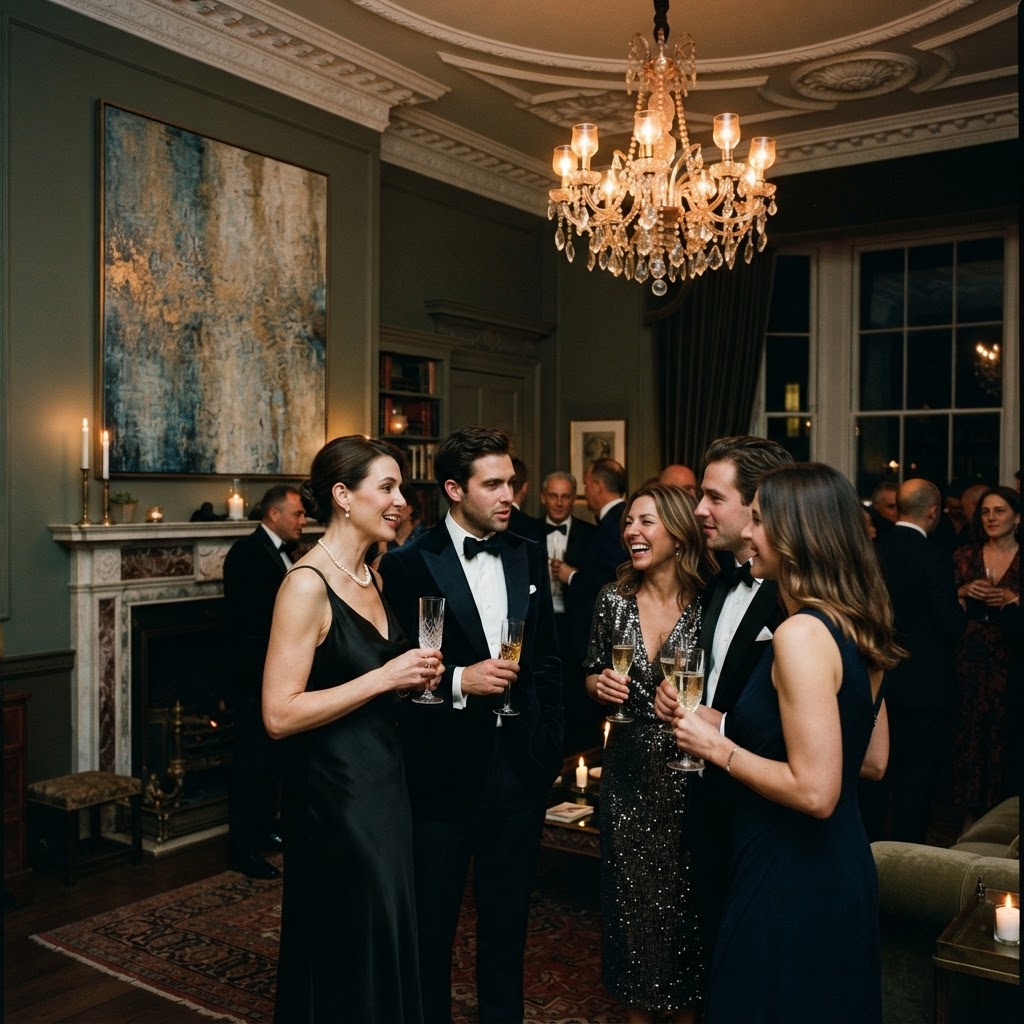
In an era defined by the digital noise of social media influencers and the overwhelming frenzy of public gallery openings, the true currency of London society is shifting. The velvet ropes of Mayfair’s most exclusive clubs are losing their lustre, replaced by something far more elusive and infinitely more desirable: the private, curated house party. As the social calendar for the 2026 winter season reaches its zenith, the city’s cognoscenti are retreating behind the garden walls of Chelsea and the stately wrought-iron gates of Belgravia for evenings that define the new guard of British hospitality.
The Rebirth of the Salon
The modern luxury house party is less 'kegger' and more 'Renaissance Salon.' These are meticulously orchestrated affairs where the guest list is a precise blend of artistic visionaries, private equity titans, and the occasional Royal or screen icon. The focus is no longer on the size of the venue, but the density of the conversation. Guests at a recent gathering in a Grade II-listed Chelsea townhouse were treated to an unannounced, intimate recital by a soloist from the Royal Opera House, set against the backdrop of a private contemporary art collection that would humble most boutique galleries.
The essence of luxury is no longer access to the public; it is the privilege of the private. If you are seen by everyone, you are seen by no one of consequence.
Curation as the Ultimate Host Skill
Hosting has become a high-stakes performance art. The current aesthetic favors 'lived-in luxury'—a deliberate contradiction that involves expensive antiques layered with contemporary, avant-garde installations. According to society planner Julian Vane, who has curated events for the city’s most discreet families, the secret lies in the sensory experience. 'It is about the scent of a bespoke Diptyque candle that has been burning for hours, the artisanal caviar sourced directly from sustainable farms in the Caspian, and ensuring the lighting mimics the flattering glow of a Vermeer painting,' Vane explains.
The Culinary and Cultural Edge
The return of the house party also signals a move away from the impersonal nature of catering companies. The new host employs private chefs who have spent their careers in Michelin-starred kitchens, designing menus that are hyper-seasonal and entirely bespoke. We have seen a surge in interest for farm-to-table menus featuring ingredients from the host’s own country estates, paired with rare vintages from private collections—often accompanied by a personal tour of the host's cellar, which now acts as a secondary entertainment space.
The Art of the Guest List
The most exclusive invitations are now often sent by hand-delivered card, eschewing the digital footprint entirely. This secrecy fuels the allure. For the high-net-worth individual, the draw is the safety of the circle. In a home, conversations can flow without the risk of paparazzi lenses or intrusive smartphones. It is an environment of trust, where a conversation about the upcoming Turner Prize can segue into a debate about the geopolitical implications of private space exploration, all while sipping a 1961 Petrus.
As we look toward the remainder of the season, it is clear that the private residence has regained its throne as the premier venue for those who shape the cultural landscape of London. The message is simple: in a city of millions, the greatest luxury is being invited into a home where the door is rarely open to the public.