
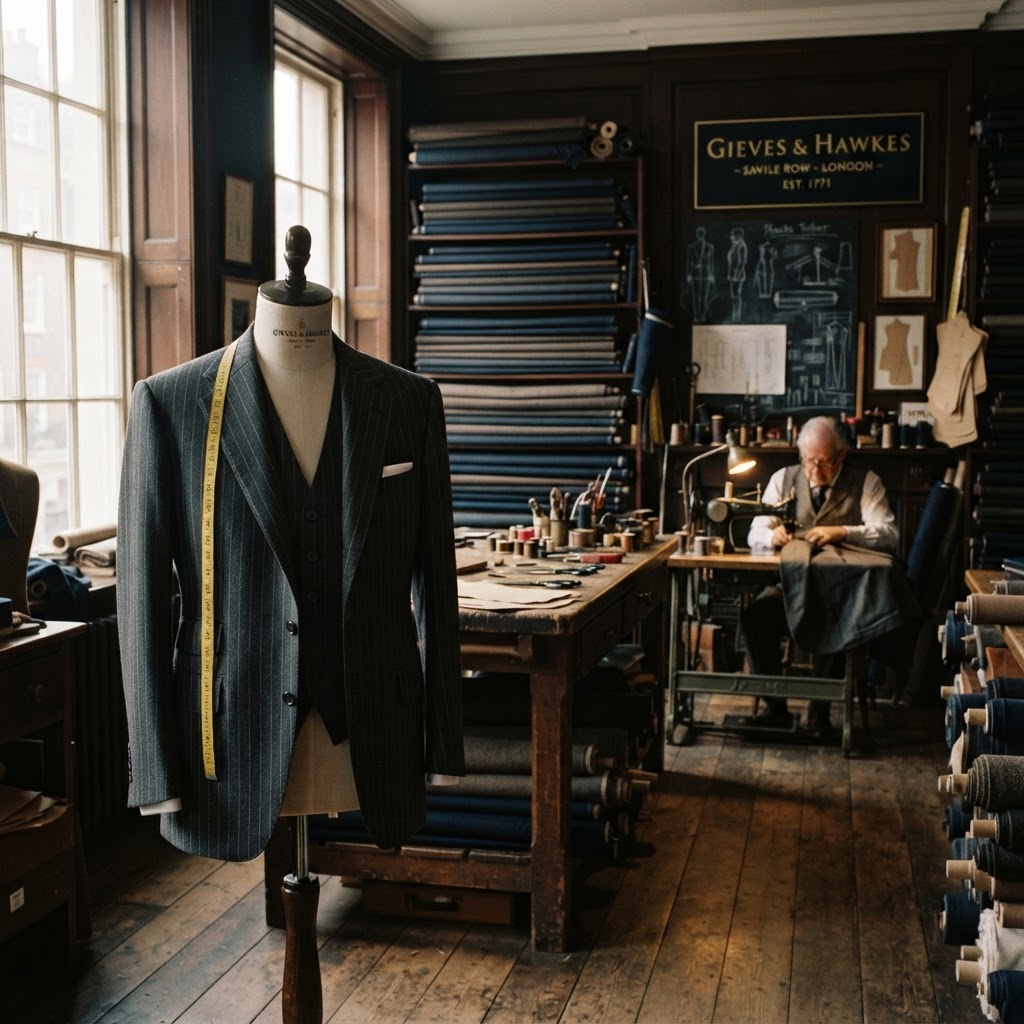
In an era of fleeting trends and high-street ephemera, there remains one bastion of sartorial permanence: Savile Row. As we move through 2026, the venerable "Golden Mile" of tailoring is experiencing a quiet, profound renaissance. While the foundations remain firmly rooted in 18th-century tradition, a new generation of master cutters is redefining the silhouette for the discerning contemporary gentleman.
The Evolution of the Bespoke Silhouette
Stepping into a house such as Huntsman or Henry Poole & Co is akin to entering a sanctuary of stillness. Here, the process is a slow, methodical ritual—a stark defiance of the digital age. In 2026, the focus has shifted towards ‘effortless structure.’ Where the rigid, heavy padding of yesteryear once dominated, today’s bespoke suit prioritizes a fluid, second-skin construction that moves with the wearer, utilizing rare, lightweight Super 200s wools and vicuña blends sourced through ethical partnerships.
The Collaborative Frontier
True bespoke is not merely about measurements; it is a conversation between the cutter and the client, a sartorial dialogue that results in a garment that is, quite literally, an extension of one’s identity.
We are seeing an unprecedented level of designer collaboration. Luxury fashion houses, long the antithesis of the bespoke tailor, are now looking to the Row to inject authentic provenance into their limited edition collections. This convergence is most visible in the bespoke accessories market. Imagine a custom-cut blazer from Anderson & Sheppard paired with fine jewellery—perhaps a bespoke platinum signet ring—designed by Chelsea’s leading boutiques to mirror the suit’s specific drape. It is this attention to the holistic lifestyle that elevates bespoke from a garment to an heirloom.
The Modern Gentleman’s Checklist
For those embarking on their first commission in 2026, the etiquette remains unchanged, though the options have expanded. When visiting a house like Maurice Sedwell, expect an initial consultation that feels more like an immersive design session. You are not buying a suit; you are commissioning an engineering feat. You must consider the fabric’s weight, the canvas construction, and the subtle details—the working buttonholes, the horn buttons, and the hand-stitched lapels—that separate a bespoke piece from its made-to-measure cousins.
As we observe the shifting tides of fashion, it becomes clear that Savile Row has successfully navigated the challenge of relevance. By embracing sustainable practices—such as utilizing end-of-roll heritage fabrics and focusing on timeless longevity—the tailors of the Row have positioned themselves as the ultimate sustainable choice for the high-net-worth individual. In the heart of London, tradition is not merely being preserved; it is being perfected.