
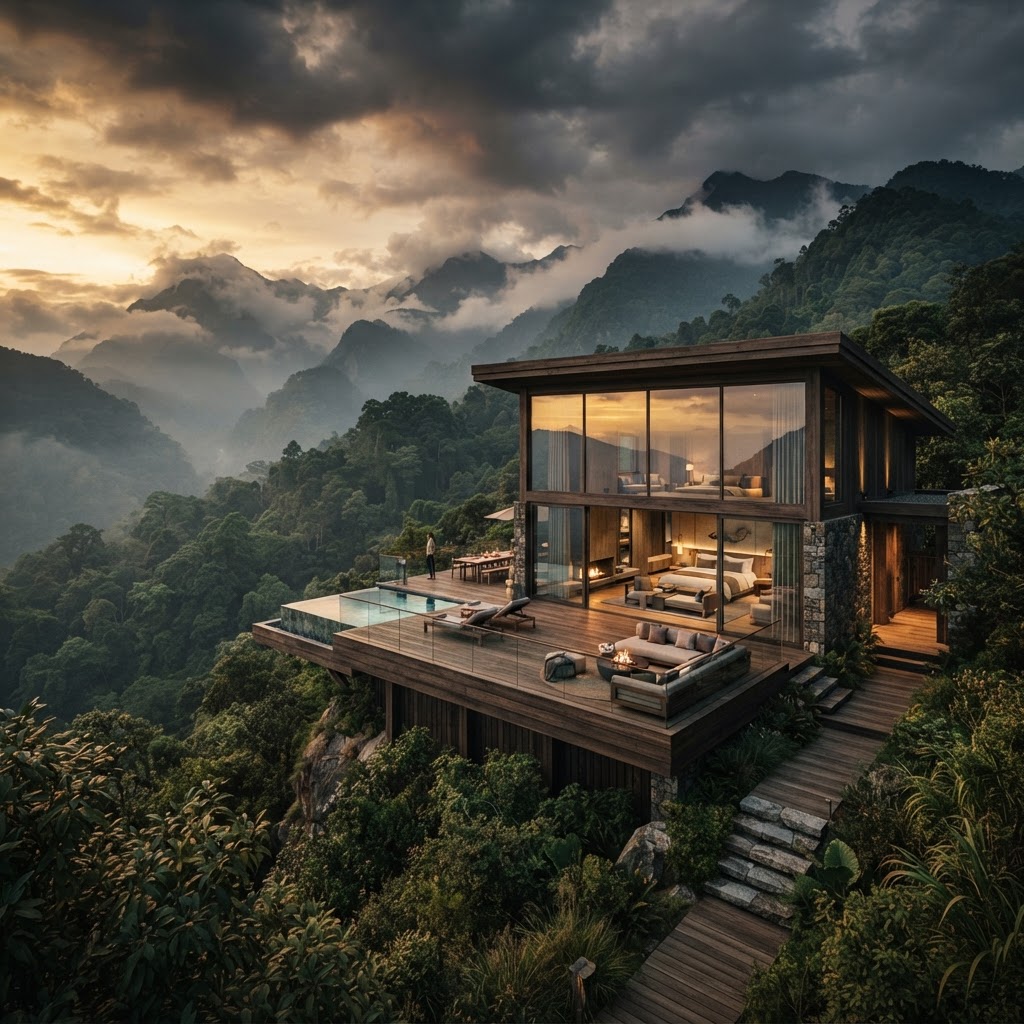
In the rarefied world of ultra-luxury travel, the definition of opulence has undergone a tectonic shift. It is no longer found in the gold-leafed lobbies of metropolitan grand hotels, but rather in the profound, curated silence of the planet’s most inaccessible corners. Six Senses, a brand that has long pioneered the synergy between restorative wellness and architectural humility, has recently unveiled a collection of wilderness retreats that challenge our understanding of what it means to truly escape.
The Architecture of Absence
Stepping into the new Six Senses sanctuary in the Bhutanese Himalayas, one is struck not by the opulence of the fixtures, but by the intentionality of the space. The villas, constructed from reclaimed cedar and local river stone, are designed to dissolve into the jagged silhouette of the mountains. This is 'biophilic luxury' in its purest form. As the brand’s CEO, Neil Jacobs, recently remarked during our private briefing, 'Luxury today is about the luxury of space, the luxury of silence, and the luxury of being entirely present in a place that has been untouched for centuries.'
A Masterclass in Conscious Hedonism
At these properties, the experience is underscored by a rigorous, bespoke wellness protocol. Guests are not merely booking a room; they are engaging in a transformation. The Alchemy Bar, a signature staple, allows visitors to blend indigenous flora—sourced from the surrounding slopes or jungles—into personalized body scrubs and tonics. It is an artisanal approach to wellbeing that feels lightyears away from the sterile, clinical environments of traditional hotel spas.
The true measure of a luxury retreat is its ability to facilitate a meeting between the guest and the wild, without compromising a single thread of creature comfort.
Dining, too, has evolved. The farm-to-table philosophy is taken to its logical extreme here, with menus dictated not by market trends, but by the rhythmic yields of the nearby permaculture gardens. Paired with a vintage bottle of biodynamic Cabernet, the experience serves as a reminder that hedonism and environmental stewardship are not mutually exclusive; they are, in fact, the new twin pillars of the discerning traveler’s life.
The Logistics of Inaccessibility
Of course, reaching these outposts is an experience in itself. Six Senses has collaborated with private aviation specialists to ensure the journey is as seamless as the stay. Whether arriving via a chartered Gulfstream to the nearest regional airstrip or via a private helicopter transfer that provides a bird’s-eye view of the canopy, the transition from the frantic pace of London life to the stillness of the retreat is absolute. For those who favor the sea, the brand's upcoming expansion into the archipelago of remote islands will soon offer superyacht-accessible jetties, linking the raw wilderness of the jungle to the crystalline solitude of the ocean.
The Legacy of Stillness
As we look toward 2027, the demand for these private, remote sanctuaries is set to skyrocket. High-net-worth individuals are moving away from the crowded resorts of the Amalfi or the frantic boutiques of St. Barts, seeking instead the profound reset that only true wilderness can provide. Six Senses has not just built hotels; they have built a philosophy. They have recognized that for the global elite, the most valuable commodity is no longer time or money, but the ability to disconnect from the digital noise and reconnect with the raw, untethered reality of the earth itself.